Under-Sink Organization Ideas for Small Kitchens
The cabinet under the kitchen sink is the hardest storage space in a small kitchen to organize. Pipes run through the middle of it, the floor can get damp, and what lives there is mostly cleaning products, not food.
The best under sink organization ideas start by accepting those three facts: work around the pipes, measure the awkward shape, and give cleaning supplies a clear home.
Table of Contents
- Why the Space Under the Sink Is Different
- Step 1: Empty It, Check for Leaks, and Measure Around the Pipes
- Step 2: Decide What Belongs Under the Sink — and What Does Not
- Step 3: Give the Space Zones That Fit Around the Pipes
- Pull-Out Caddies: The Easiest Way to Reach the Back
- Tiered Shelves and Stacking Around Pipes
- Using the Cabinet Doors
- Spray Bottles, Sponges, Cloths, and Bin Bags
- Small, Shallow, and Awkward Under-Sink Cabinets
- Damp, Smells, and What to Do About a Leak
- Safety: Children, Pets, and Cleaning Products
- Renter-Friendly Under-Sink Storage
- A Short Weekly Reset That Keeps It Working
- Common Mistakes to Avoid
- Frequently Asked Questions
- Conclusion
Why the Space Under the Sink Is Different
Most kitchen cabinets are simple boxes with flat shelves. The cabinet under the sink is not: a drain pipe drops down, a trap bends underneath it, and water pipes often run up the back or along one side.
Damp is the second difference. Water splashes, a sponge drips, or a joint weeps slowly, so cardboard goes soft and labels peel — use plastic or coated metal instead.
The third difference is what lives there: cleaning products are bulky, oddly shaped, and should never sit next to food. For the wider picture, see 25 Smart Small Kitchen Organization Ideas That Make Every Inch Count.
Step 1: Empty It, Check for Leaks, and Measure Around the Pipes
Take everything out and put it on the counter so you can see what you own. With the cabinet empty, run the tap and watch the joints, then feel the floor and back panel for wet patches or swelling.
If you find a steady drip or a floor that never dries, stop organizing and deal with the leak first.
Then measure the clear floor space on each side of the pipes, and note anything that shrinks it, such as a shelf lip or a hinge. Check them against organizer dimensions, not photographs. For the same habit in the rest of the kitchen, see How to Organize a Small Kitchen with Limited Cabinet Space.
Step 2: Decide What Belongs Under the Sink — and What Does Not
Sort what came out into four groups: keep, move elsewhere, use up soon, and throw away or recycle. Keep only cleaning and sink-related items you use regularly: washing-up liquid, a multi-surface spray, dishwasher tablets if you have a dishwasher, sponges, cloths, rubber gloves, and bin bags.
Do not store food under the sink, even sealed packets and tins. The space is damp, it sits next to cleaning chemicals, and a small leak can ruin food before you notice it — the same goes for pet food, medicines, or anything you eat or drink.
If the sorting feels like a lot, see How to Declutter a Small Kitchen: A Step-by-Step Guide.
Step 3: Give the Space Zones That Fit Around the Pipes
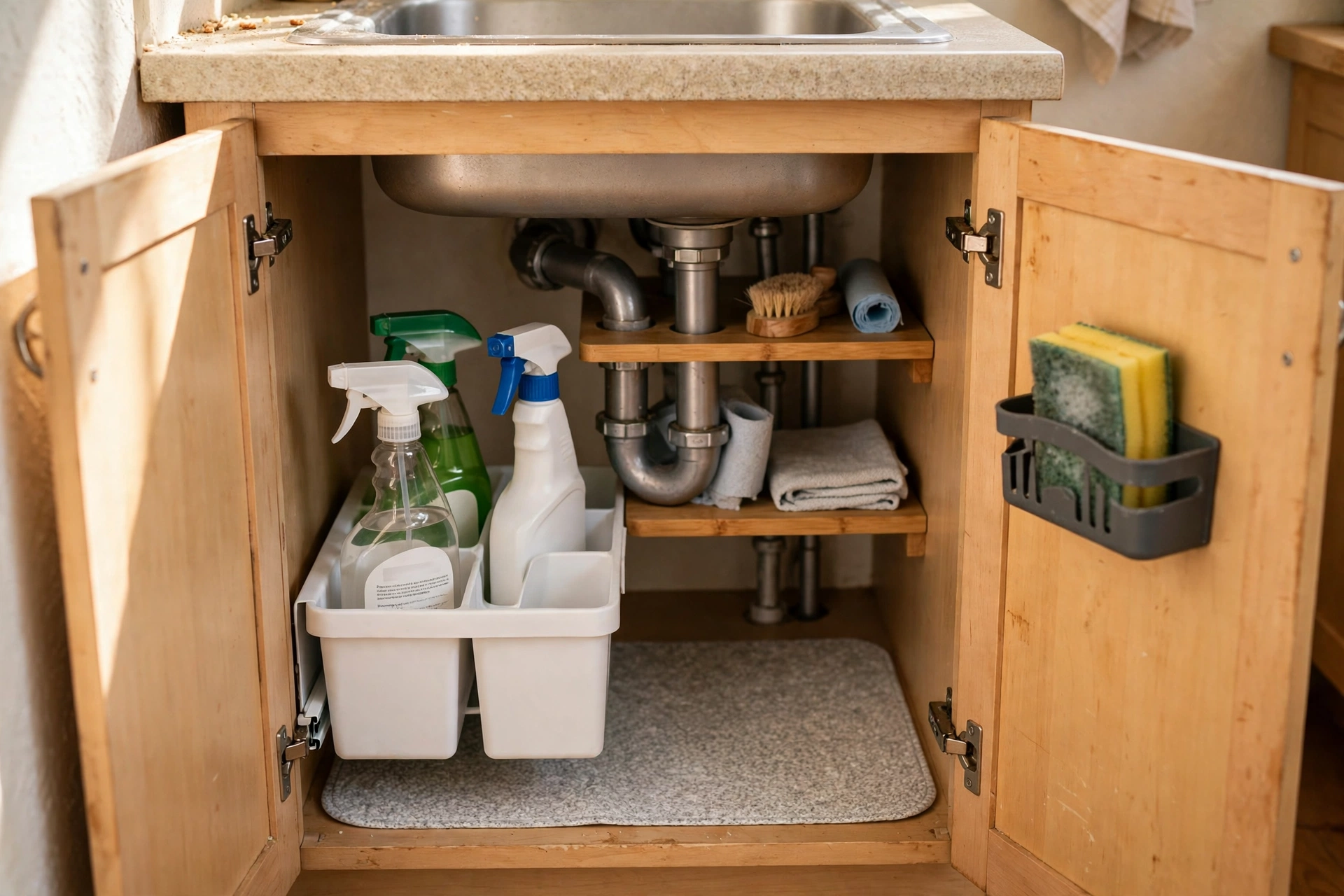
Split the cabinet into zones that follow the shape of the pipes. The first zone is the front, at floor level, on the side with the most clear space: put daily items there — washing-up liquid, your most-used spray, and a small caddy you can pull out with one hand.
Nothing should be stored behind these items, because anything behind them will be forgotten. The second zone is the sides, beside the trap, for spares and taller bottles, and the third zone is the doors, for flat, light things like sponges and cloths. For the same zoning rule in the rest of your cabinets, see Small Kitchen Cabinet Organization: Practical Ideas for a Clutter-Free Space.
Pull-Out Caddies: The Easiest Way to Reach the Back

A pull-out caddy is the single most useful organizer under the sink: a low basket or tray that slides towards you so you can reach everything without crouching past the pipes.
Choose one that fits the clear floor space on one side of the trap, not the full width of the cabinet, and leave room for the door to close. Use it for daily cleaning items grouped together: washing-up liquid, your most-used spray, a sponge, and rubber gloves.
Tiered Shelves and Stacking Around Pipes
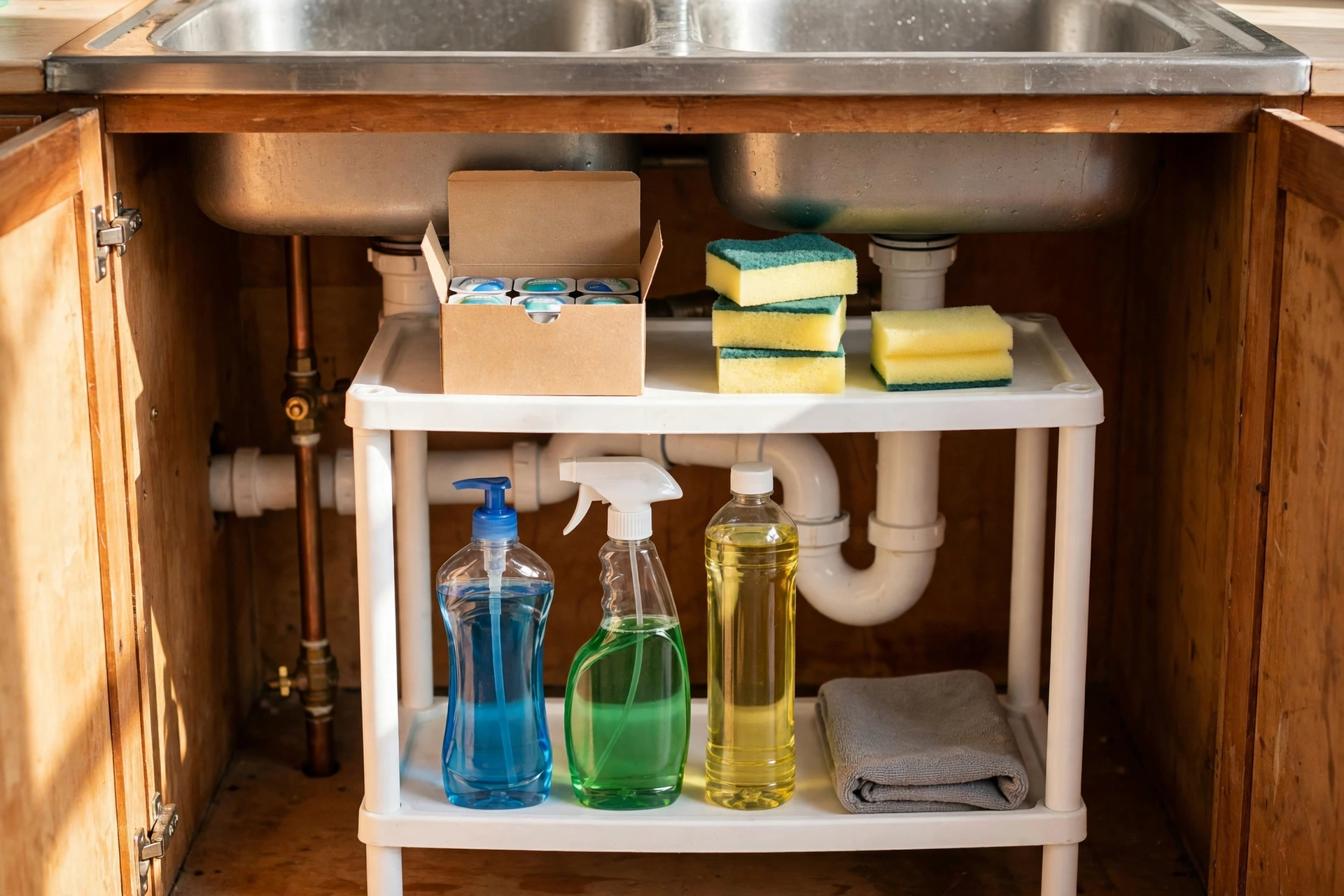
A tiered shelf — a small two-level shelf on the cabinet floor — can double the usable space beside the pipes, but only if it fits. Measure the height to the underside of the sink and the width of the clear space beside the trap first.
Many under-sink shelves are made in two parts so they can be arranged around the pipes. Use the lower level for heavier, taller bottles and the upper level for lighter, shorter items such as a box of dishwasher tablets or spare sponges in a sealed bag.
Using the Cabinet Doors
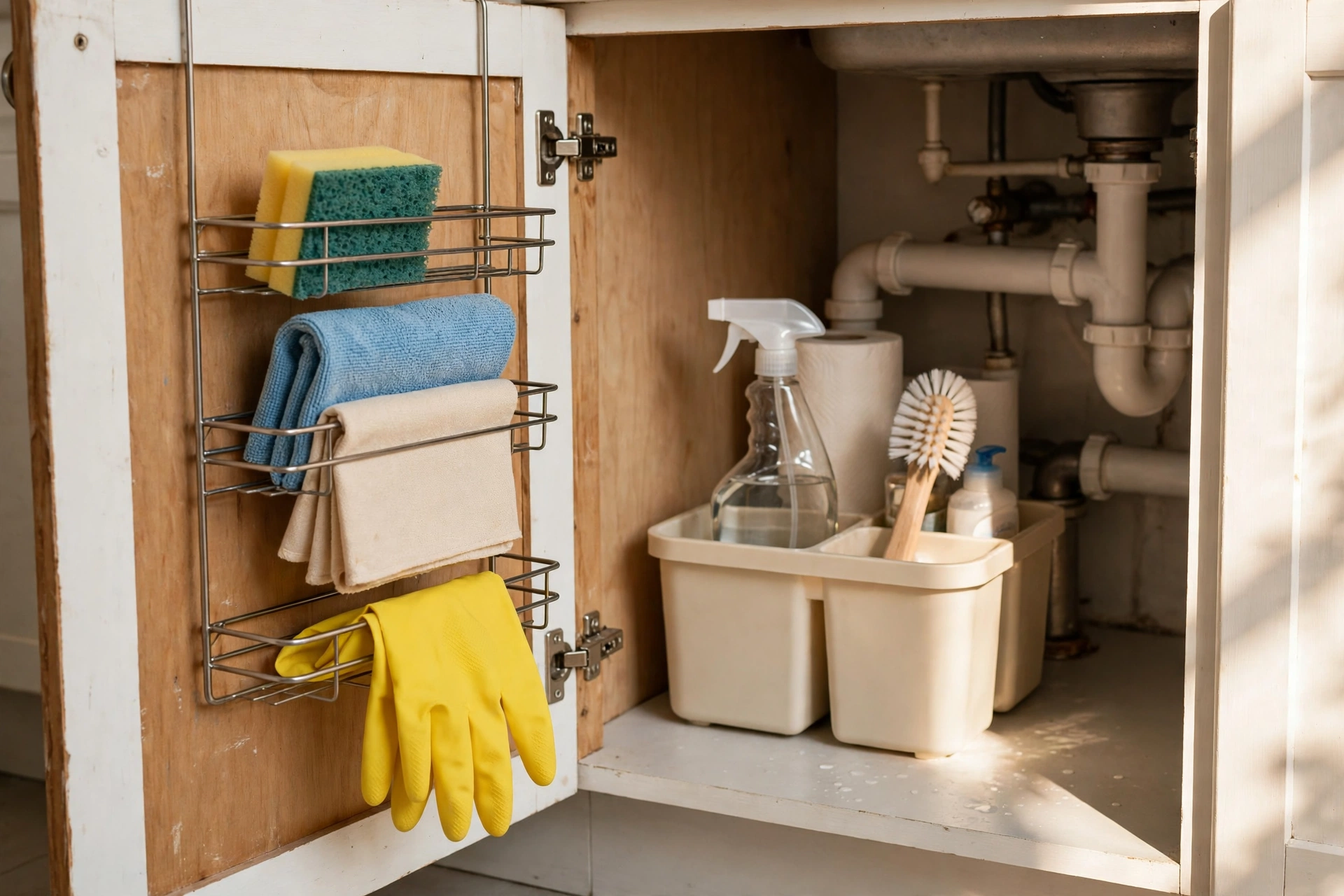
The inside of the under-sink cabinet doors is free storage that most people forget, best for flat, light items you need often: sponges, cloths, rubber gloves, and a small brush. A slim rack, a row of adhesive hooks, or a small hanging pocket organizer fixed to the door can hold all of these without drilling — but keep door storage light and shallow, so the door still closes fully.
Spray Bottles, Sponges, Cloths, and Bin Bags
Spray bottles are the hardest items to store under the sink because they are tall and top-heavy. Store them upright with their triggers facing the same way, so you can grab one without knocking the others over.
A tension rod fitted across the cabinet — a spring-loaded rod that wedges between the two sides without screws — can hang spray bottles by their triggers, keeping them upright and visible and freeing the floor below for a caddy.
Sponges and cloths need air to dry, so keep them in a holder on the door or in a small basket, not in a wet heap. Keep bin bags in a small box or a roll holder.
Small, Shallow, and Awkward Under-Sink Cabinets
Not every small kitchen has a full cabinet under the sink: some have a shallow or narrow one, and some have no cabinet at all — just a curtain or an open space under a Belfast sink.
For a shallow cabinet, use low, wide containers rather than tall bottles, and never transfer cleaning products into unlabelled bottles — that is unsafe. Instead, look for smaller bottles, or store the tall bottles elsewhere and keep only a small spray and a sponge under the sink.
For a narrow cabinet, a single slim caddy is better than a shelf that does not fit. If there is no cabinet at all, a small lidded box beside the sink can hold the daily items — but never store cleaning products where a child can reach them.
Damp, Smells, and What to Do About a Leak
A damp cabinet is a warning, not just a nuisance: a slow drip from a joint, a trap that is not sealed properly, or condensation on cold pipes. To find the source, dry the cabinet, put a dry cloth under each joint, and check it after a day — the wet patch shows you where the water is coming from.
A musty smell usually means something is wet: a sponge left in a heap, a leaked bottle, or food stored under the sink. Remove the source first, then clean the floor with warm water and washing-up liquid, dry it thoroughly, and leave the doors open for a few hours.
Safety: Children, Pets, and Cleaning Products
Safety shapes every other decision here. Cleaning products can be harmful if swallowed, inhaled, or splashed in the eyes, and this cabinet is at exactly the height a small child or a pet can reach.
If children visit or live in your home, or you have pets, fit a childproof lock or latch on the doors. Magnetic locks fitted inside the cabinet are discreet and suit rented homes, while a simple latch an adult can open with one hand is often enough.
Inside, keep the most hazardous products — anything labelled corrosive, irritant, or harmful, including bleach, oven cleaner, and drain cleaner — at the back or on the highest shelf, in their original bottles with lids on. Never mix cleaning products, especially bleach with other cleaners, as this can create harmful fumes.
Renter-Friendly Under-Sink Storage
Renters face the same under-sink problems as homeowners, but without the option of drilling, fitting permanent shelves, or changing the plumbing. The good news is that almost all under-sink storage can be freestanding or adhesive-mounted, so it can be removed without damage when you move out.
Tension rods wedge between the cabinet sides without fixings, adhesive hooks stick to the inside of the door, and freestanding caddies and tiered shelves lift out in seconds. Check your tenancy agreement before you fit anything, even with adhesive, and test a small, hidden spot first, since adhesive strips can pull paint off or leave residue. For more no-drill ideas, see Small Kitchen Organization for Renters: No-Drill Storage Ideas.
A Short Weekly Reset That Keeps It Working
Under-sink storage fails when bottles creep back in, sponges are left wet, and a small leak goes unnoticed for weeks. A five-minute weekly check is enough: open the doors and look — is the floor dry, is anything leaking, and is every bottle upright?
Put anything that has wandered out of its zone back in place, throw away a sponge that smells or is falling apart, and wipe up any small spill. If the counters collect the overflow when the cabinet is full, see Small Kitchen Counter Organization: Keep Your Counters Clear and Useful.
Common Mistakes to Avoid
Storing food under the sink. Food does not belong next to cleaning chemicals in a damp space; move it to a dry cupboard instead.
Buying organizers before measuring around the pipes. A shelf or caddy that does not fit the space beside the trap is wasted money; measure first.
Cramming the cabinet full. A cabinet with no empty space hides leaks; leave room to see the pipes and pull a caddy out.
Leaving sponges and cloths in a wet heap. Wet sponges smell and need replacing sooner; let them dry in a holder.
Decanting cleaning products into unlabelled bottles. An unlabelled bottle is a safety risk, especially with children in the home; keep products in their original bottles.
Ignoring a damp patch or a musty smell. Damp is usually a sign of a leak or condensation; find the source and fix it.
Mixing cleaning products. Never mix bleach with other cleaners; use one product at a time, follow the label, and ventilate the room.
Frequently Asked Questions
What should I store under the kitchen sink?
Store cleaning and sink-related items only: washing-up liquid, a multi-surface spray, dishwasher tablets, sponges, cloths, rubber gloves, and bin bags. Do not store food, pet food, medicines, or anything you eat or drink there.
How do I organize under the sink around pipes?
Measure the clear floor space on each side of the pipes, then choose storage that fits those pockets: a pull-out caddy on the side with the most room, a two-part tiered shelf around the trap, and door storage for flat, light items. Leave space around the pipes so you can spot a leak early.
What is the best under-sink organizer for a small kitchen?
A pull-out caddy is usually the best starting point, because it brings everything at the back within reach. Add a small tiered shelf beside the pipes and door storage for sponges and cloths only if they fit your measurements.
How do I keep cleaning products safe from children and pets?
Fit a childproof lock or latch on the cabinet doors and keep it closed. Store the most hazardous products at the back or on the highest shelf, in their original bottles with lids on.
Conclusion
Organizing the space under the sink comes down to working with the cabinet you have, not against it: measure around the pipes, store cleaning supplies only, and give daily items a pull-out caddy at the front, spares a tiered shelf at the sides, and sponges and cloths a holder on the door.
Keep the floor dry, check for leaks regularly, and keep cleaning products upright and labelled. Start this week: empty the cabinet, check for damp, and put back only what you use at the sink.
For your next step, read How to Create More Storage in a Small Kitchen Without Remodeling, which goes deeper into freestanding and no-drill storage for the whole kitchen. For the pantry, see Small Pantry Organization Ideas for Tight Spaces, and for drawers, How to Organize Kitchen Drawers in a Small Kitchen.
3 thoughts on “Under-Sink Organization Ideas for Small Kitchens”