
A small kitchen has to work harder when a whole family uses it. Breakfast, school lunches, dinner, snacks, and homework can all land in the same few square feet — and small kitchen organization for family life is what keeps that from turning into a daily mess.
The good news is that you do not need more space. Small kitchen organization for family life is mostly a clear plan: a place for each person’s things, a simple routine, and zones that match how your family actually cooks and eats.
This guide walks through it step by step, from a family clear-out to a daily reset everyone can follow.
Table of Contents
- What Makes Small Kitchen Organization for Family Different
- Start With a Family Clear-Out
- Zone the Kitchen by Who Uses What
- Cabinets That Work for Every Age
- Drawers, Counters, and the Lunchbox Station
- The Pantry and Fridge: Family Food Zones
- Containers, Lunchboxes, and Lids
- A Daily Reset the Whole Family Can Do
- Safety First: Kids in a Small Kitchen
- Common Mistakes to Avoid
- Frequently Asked Questions
- Conclusion
What Makes Small Kitchen Organization for Family Different
A family kitchen is not just a cooking space. It is a breakfast bar, a lunch-packing station, a snack cupboard, and sometimes a homework table, all in one small room.
That means more people, more stuff, and more mess in the same few cabinets. Small kitchen organization for family homes has to plan for all of it, not just for one cook.
Kids need things they can reach. Adults need the sharp and heavy things out of reach. Everyone needs to find what they want without emptying a whole cabinet.
The answer is not more organizers. It is fewer things, clear zones, and a routine the whole family can keep.
Start With a Family Clear-Out
Before you buy anything, take things out. A family kitchen collects duplicates fast: three spatulas, two cheese graters, and a drawer of lids with no containers.
Set aside one hour on a weekend and work through one area at a time. Sort everything into keep, move, donate, and throw away, and let the kids choose what happens to their own cups and lunchboxes.
Be honest about what your family really uses. If nobody has touched the bread maker in a year, it does not earn a place in a small kitchen. How to Declutter a Small Kitchen: A Step-by-Step Guide walks through the same idea area by area.
Keep only what fits the way you cook now. A family of four needs four of each everyday item, not ten. The rest can go to a relative, a charity shop, or the recycling.
Zone the Kitchen by Who Uses What
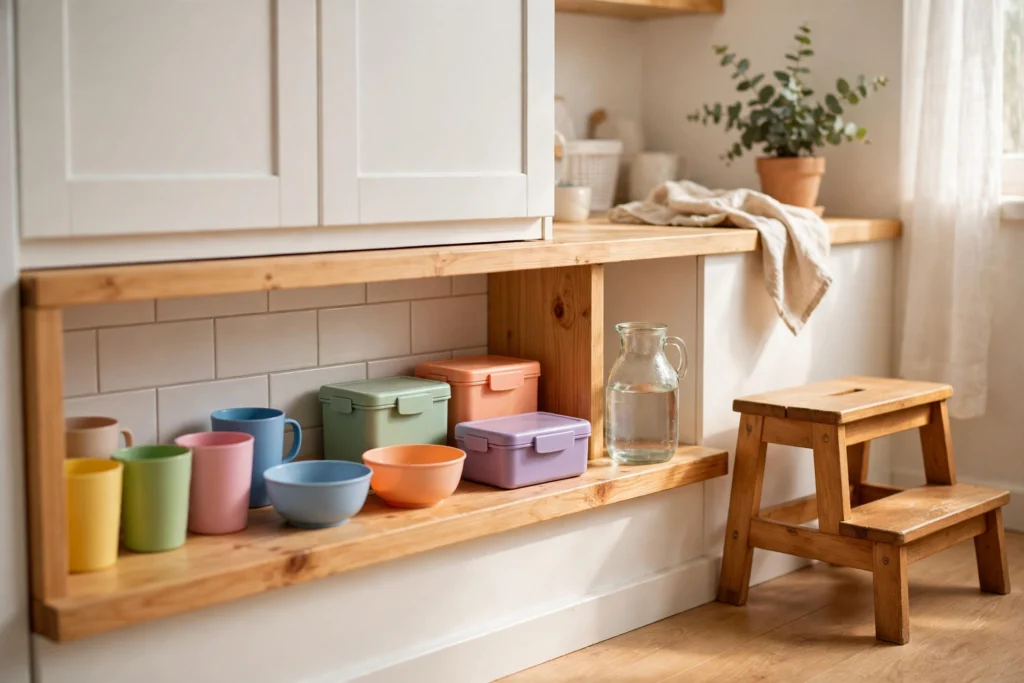
Zones are the heart of small kitchen organization for family life.
Instead of storing things by type alone, store them by who uses them and when. That is the whole idea behind small kitchen organization for family homes. That way, the kids can help themselves without climbing, and the cook is not tripping over the snack cupboard.
Start by watching your family for one normal day. Notice where everyone stands, what they reach for, and where things pile up. Those trouble spots are your zones.
The cooking zone
Keep the cooker, the pans, the oils, and the cooking tools together. Everything the cook needs should sit within one or two steps of the hob, so dinner does not turn into a treasure hunt.
For a fuller look at cabinet zoning, see How to Organize a Small Kitchen with Limited Cabinet Space.
The kids’ snack zone
Give the kids one low shelf or one low drawer they own. Fill it with their cups, bowls, snack boxes, and a small jug of water they can pour themselves.
When kids can reach their own snacks, they stop asking you every ten minutes. They also stop climbing on chairs to reach high shelves, which is safer for everyone.
The lunchbox corner
Pick one counter corner for lunchboxes, water bottles, and the next day’s snacks. Pack lunches there the night before, and keep the bottles and boxes in one low cabinet below it.
A fixed spot means no morning hunt for a missing lid. It also means the kids can pack their own lunchboxes as they get older, which saves you time.
Cabinets That Work for Every Age
In a family kitchen, cabinets need two levels of thinking. Adults need the everyday plates and pans at waist height, and kids need their things low enough to reach without help.
Small kitchen organization for family homes puts the everyday dishes in one low-to-middle cabinet near the dishwasher or sink. That way, unloading the dishwasher is quick, and the kids can set the table.
Keep the top shelves for things only adults use: sharp knives in a block or a high cupboard, heavy baking dishes, and anything breakable you do not want small hands to find.
Shelf risers and small baskets inside cabinets double the usable space without any building work. For more cabinet ideas, see Small Kitchen Cabinet Organization: Practical Ideas for a Clutter-Free Space.
Drawers, Counters, and the Lunchbox Station
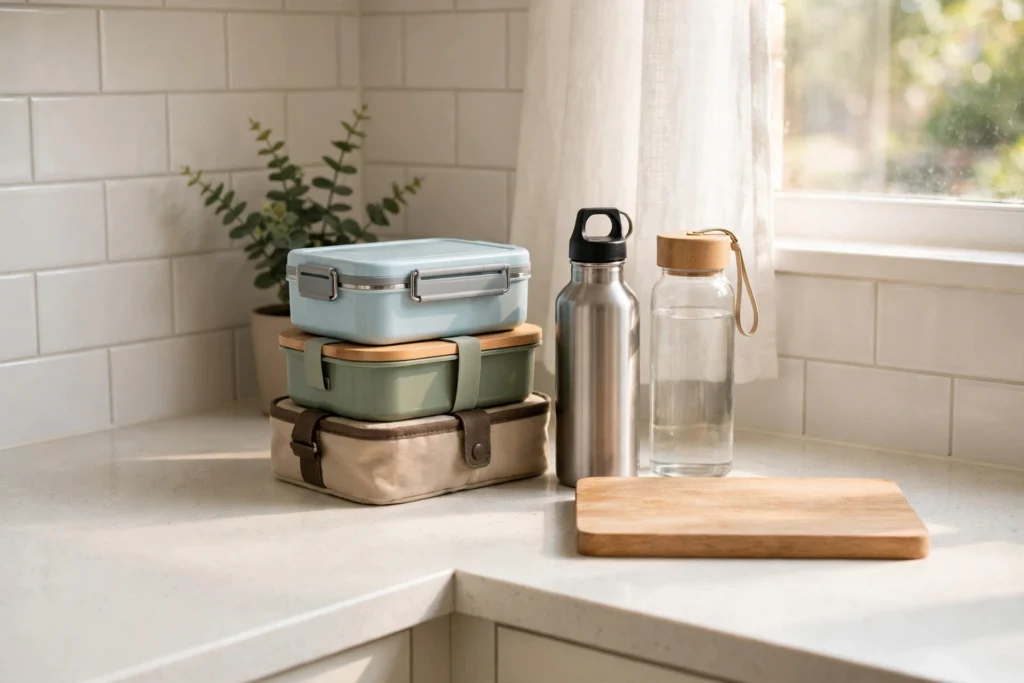
Drawers are where small kitchen organization for family life either works or falls apart. Give each drawer one job, and label it if the kids are old enough to read.
One drawer for cutlery, one for the kids’ things, and one for cooking tools is enough for most families. Dividers stop the drawers from turning back into a jumble within a week.
For drawer layouts that last, see How to Organize Kitchen Drawers in a Small Kitchen.
Counters need the same discipline. Keep one stretch clear for cooking, and keep the lunchbox station to a single corner. Everything else — the school bags, the post, the homework — belongs somewhere that is not the kitchen counter.
A clear counter makes the whole kitchen feel bigger. If you want a fuller plan for keeping counters clear, read Small Kitchen Counter Organization: Keep Your Counters Clear and Useful.
The Pantry and Fridge: Family Food Zones
Food storage is where small kitchen organization for family homes saves the most time. A pantry full of half-open packets and a fridge full of forgotten leftovers will slow down every meal.
Give the pantry one shelf for the kids: cereal, crackers, and snack bars they can take themselves. Keep the cooking staples — rice, pasta, tins, and spices — on the shelves above it.
Clear containers with simple labels help everyone see what is left. For pantry layouts, see Small Pantry Organization Ideas for Tight Spaces.
In the fridge, give each person or each meal type a spot. One shelf for the kids’ lunches, one for dinner ingredients, and one for leftovers stops the daily dig through every shelf.
Keep raw meat on the lowest shelf, away from ready-to-eat food, and check the fridge once a week for anything past its best. For a full fridge system, see Small Fridge Organization for Meal Prep.
Containers, Lunchboxes, and Lids
Every family kitchen has a container problem. The trick is to own fewer containers and keep them in one place, lids stacked beside them instead of scattered across three drawers.
Pick one size for most lunchboxes and one size for leftovers. Stack the boxes, nest the lids in a small basket, and throw away any container with a missing lid or a cracked corner.
Let the kids pack their own lunchboxes from the container stack. It teaches them to plan, and it means you are not the only person who knows where the lids live.
For a full system for boxes and lids, see How to Organize Food Storage Containers and Lids.
A Daily Reset the Whole Family Can Do

A family kitchen does not stay tidy by itself. It stays tidy because of a short daily reset that everyone helps with, not because one person cleans up after everyone else. That is the heart of small kitchen organization for family life: a short job, shared by everyone.
Keep the reset to five minutes after dinner. Everyone clears their own plate, wipes their own spot, and puts one thing back where it belongs. Small hands can wipe the table and push in chairs.
Add a weekly ten-minute job: one person checks the fridge, one person wipes the counters, and one person tidies the snack shelf. Rotate the jobs so nobody feels stuck with the same chore.
A simple chart on the fridge door helps younger kids see whose turn it is. Keep it cheerful and short, and praise the effort rather than the result.
For a fuller routine you can keep going all year, see A Small Kitchen Cleaning and Organization Routine You Can Maintain.
Safety First: Kids in a Small Kitchen
A small kitchen puts kids close to the cooker, the kettle, and the knives. Safety is part of organization, not an afterthought, so plan it into your zones.
Keep knives, scissors, and heavy pans on high shelves or in a latched drawer. Store cleaning products in a high cupboard or behind a child lock, well away from food.
Turn pot handles inward on the hob, and keep hot drinks and the kettle at the back of the counter. Give toddlers a safe drawer of their own — wooden spoons and plastic bowls — so they can play cook without danger.
Teach older children one rule at a time: how to use the microwave safely, how to carry a hot plate with both hands, and how to ask for help with anything sharp or hot.
Common Mistakes to Avoid
Most small kitchen organization for family homes goes wrong in the same few ways. Avoid these and the system will last much longer.
Buying organizers first. New baskets and racks feel like progress, but they only help once you know what you are storing. Clear out and measure first, then buy what fits.
One system for everyone. A setup that works for two adults will fail with a toddler and a teenager in the house. Give each age group its own shelf and its own rules.
Keeping everything “just in case.” A small kitchen cannot store a spare for every meal. If you have not used it in a year, it is taking space from something you use every week.
No home for the school run. Lunchboxes, water bottles, and school bags need a spot by the door or on one shelf. Without it, they land on the counter every single morning.
One person doing it all. If only one adult keeps the kitchen tidy, the system dies the first busy week. Share the reset, even with small children, and keep the jobs tiny.
Frequently Asked Questions
How do I organize a small kitchen with kids of different ages?
Give each age group its own low shelf or drawer. Toddlers get plastic cups and bowls at floor level, older children get their snack shelf and lunchbox spot, and teenagers get a small shelf for their own breakfast things.
What is the best way to organize school lunches in a small kitchen?
Keep everything in one lunchbox station: boxes, lids, bottles, and snack bags in a single low cabinet or drawer. Pack the night before, and keep a short list of lunch ideas on the fridge door.
How can I keep a small family kitchen tidy every day?
Use a five-minute reset after dinner, with everyone clearing their own things. A weekly ten-minute tidy keeps the small jobs from piling up, and a clear counter is the fastest way to make the room feel calm.
Where should I store snacks so kids can reach them safely?
Use one low shelf or drawer that holds only snacks you are happy for the kids to take. Keep sweets and anything with a sharp packet out of reach, and keep the snack zone away from the cooker.
Do I need to buy new organizers for a family kitchen?
No. Start by clearing out and zoning what you already own. Buy only one or two things that fix a real problem, like a shelf riser or a set of dividers, and only after you have measured the space.
Conclusion
Small kitchen organization for family life is not about a perfect kitchen. It is about a kitchen where everyone can find what they need, help themselves, and put things back without a fuss.
Start small. Pick one zone this week — the snack shelf, one cabinet, or the lunchbox corner — and set it up properly. When that zone works, move on to the next one.
Small kitchen organization for family homes grows one small win at a time, and the first win is the one your kids can reach by themselves.
1 thought on “How to Organize a Small Kitchen for a Family”