
Meal prep salads sound simple until day three, when yesterday’s crisp leaves have turned limp and the whole tub tastes tired. The fix is not a better container or a fancier fridge — it is the order you pack things in.
A salad that stays fresh all week is built in layers, with the wettest parts at the bottom and the leaves kept high and dry. Once you pack that way, five days of lunches come out of one short Sunday session, and the last salad tastes nearly as good as the first.
This guide walks through the layering method, the greens that hold up longest, and a simple weekly routine that fits a small kitchen and a small fridge. For more ideas that need no cooking at all, see Simple No-Cook Meal Prep Ideas for Busy Days.
Table of Contents
- Why Most Meal Prep Salads Go Soggy
- The Layering Method That Keeps Meal Prep Salads Fresh
- Which Greens Hold Up All Week
- Building a Week of Meal Prep Salads From One Prep Session
- Dressings: Keep Them Separate Until You Eat
- Proteins and Toppings: What to Add Now, What to Add Later
- Containers and Fridge Spots for Meal Prep Salads
- Common Mistakes to Avoid
- Frequently Asked Questions
- Start With Three Salads This Sunday
Why Most Meal Prep Salads Go Soggy
A salad goes soggy for one reason: moisture moves. Dressing seeps down, cut vegetables release juice, and leaves sitting in that liquid soften within a day.
The usual fix — a better lid or a colder fridge — does not solve it, because the moisture is already inside the container. What works is keeping wet and dry parts apart until you eat.
Every choice below, from the greens you buy to the container you pack, is about keeping moisture away from the leaves. If you are new to prepping ahead in a small kitchen, Easy Meal Prep Ideas for Small Kitchens is a good place to start.
The Layering Method That Keeps Meal Prep Salads Fresh
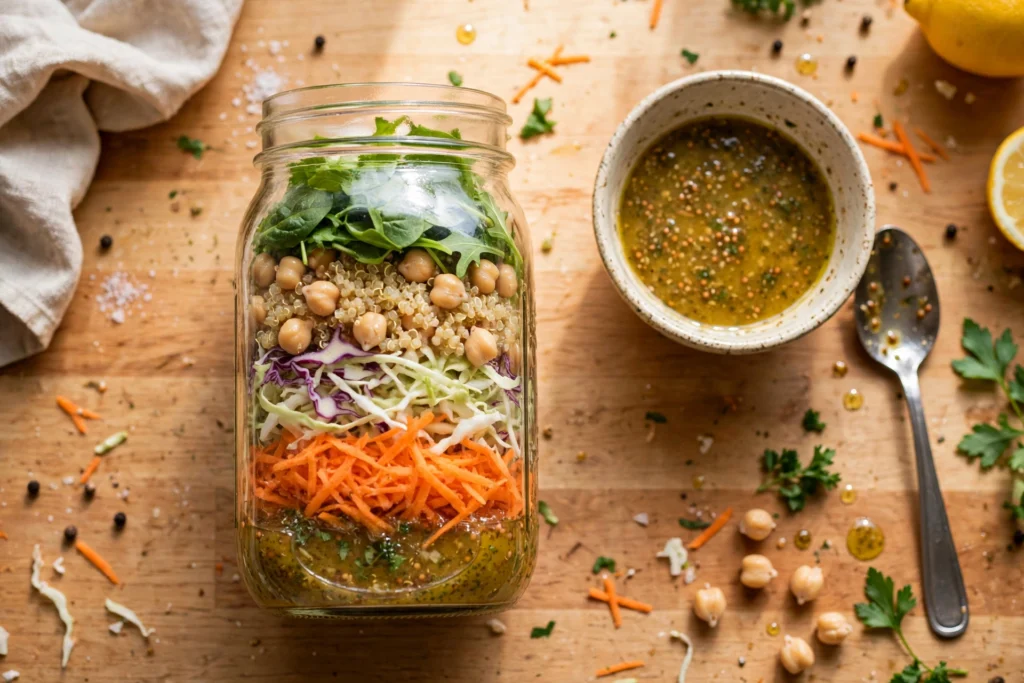
Layering is the habit that makes meal prep salads work. You build each salad upside down, with the dressing first and the leaves last, so nothing wet touches the greens.
Start with the dressing at the very bottom of the jar or container. Two or three tablespoons is enough for a single serving, and a thicker dressing works better than a thin one because it stays put.
Next comes the layer that can sit in dressing without harm: hard vegetables such as grated carrot, sliced radish, red onion, or shredded cabbage. These hold their crunch even after days against the dressing.
The jar method, step by step
A wide-mouth jar makes layering easy to see and hard to get wrong. The straight sides keep each layer where you put it, and the jar fits neatly in a small fridge.
- Spoon the dressing into the bottom of a clean, dry jar.
- Add the hard vegetables, then any grains such as cooked quinoa or brown rice.
- Add the protein — chickpeas, beans, cooked chicken, or boiled egg.
- Fill the rest of the jar with washed, dried leaves, and seal the lid.
At lunchtime, tip the jar into a bowl and toss. The dressing coats everything on the way out, and the leaves stay crisp until that moment.
The same order works in a flat container if you prefer one. Put the dressing in a small pot beside it instead of underneath, and pack the leaves on top of the other ingredients.
Which Greens Hold Up All Week

Not every green survives a week in the fridge. Sturdy leaves such as romaine, little gem, kale, and cabbage stay crisp for days, while soft leaves such as baby spinach and mixed spring leaves wilt much sooner.
Choosing the right greens is the quiet half of the method — the layering gets the attention, but the leaves do the lasting. Buy whole heads rather than pre-cut bags when you can, because a whole romaine heart lasts noticeably longer than a bag of torn leaves, and it costs less per serving too.
Wash leaves only when you are about to pack them, and dry them properly. A salad spinner does this in seconds, and a clean tea towel works if you pat the leaves gently and let them air for a few minutes.
Pack the leaves loosely on top of everything else, and do not press them down. Squashed leaves bruise and turn dark and limp.
If you love soft leaves, use them early in the week and save the sturdy greens for Thursday and Friday. That way the most delicate salads get eaten first. For the wider rules on keeping prepped vegetables fresh, see How to Keep Meal Prep Ingredients Fresh Throughout the Week.
Building a Week of Meal Prep Salads From One Prep Session
One prep session of about an hour sets up five different salads. The trick is to prep shared parts once, then vary the dressing and the protein so no two days taste the same.
- Wash and dry two kinds of greens and store them in separate containers lined with a dry cloth.
- Cook one grain, such as quinoa or brown rice, and one protein, such as a tray of chicken thighs or a pot of chickpeas.
- Chop the hard vegetables — carrots, peppers, red onion, and cabbage — and keep each in its own container.
- Mix two dressings in small jars, one creamy and one sharp, so the week has some variety.
- Assemble five salads using the layering order, and label each one with the day you plan to eat it.
A Monday salad might be quinoa, chickpeas, and a lemon dressing, while Friday’s could be brown rice, chicken, and a creamy dressing over kale. Same prep, different lunch.
Keep the week’s salads toward the front of the fridge where you can see them. For a layout that keeps prepped food easy to find, see Small Fridge Organization for Meal Prep.
If your week changes and a salad will not get eaten, the grains and protein inside it can move into a warm dinner instead. For ideas, see How to Meal Prep Dinners in a Small Kitchen. For a full week of lunch ideas beyond salads, see How to Prep a Week of Lunches in a Small Kitchen.
Dressings: Keep Them Separate Until You Eat
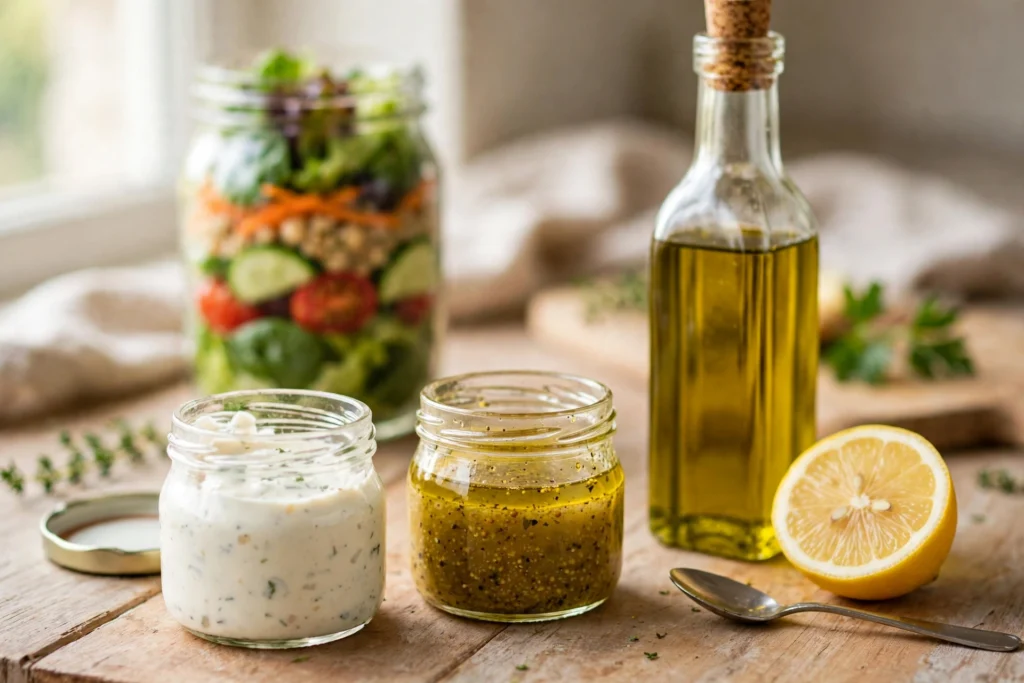
Dressing is the part that spoils a salad fastest, so it gets its own small pot or the bottom layer of the jar. Either way, it meets the leaves only at the table.
A simple vinaigrette takes two minutes: three parts oil to one part vinegar or lemon juice, a pinch of salt, and a spoonful of mustard to hold it together. Shake it in a small jar and it keeps in the fridge all week.
A creamy dressing needs a little more care. Yoghurt-based dressings keep well for a few days, so make a small batch and use it early in the week.
Taste the dressing before you pack it, and make it slightly stronger than you think it needs. Cold food dulls flavour, and a dressing that tastes bold in the jar will taste right on chilled leaves.
Carry the dressing pot inside the lunch bag, so a leak stays contained.
Proteins and Toppings: What to Add Now, What to Add Later
Some salad parts are happy to wait all week, and some are not. Knowing which is which is the difference between salads that hold up and ones that go soft by Wednesday.
Chickpeas, kidney beans, lentils, and cooked grains can go in on prep day. They soak up a little dressing and taste better for it, and they keep their shape for days.
Cooked chicken, boiled eggs, and tofu also pack well at the start of the week. The FDA’s guide to storing food safely explains how long cooked food keeps in the fridge, so check it before you stretch a batch past a few days.
Add cheese the morning you eat the salad. Hard cheese such as feta holds up better than soft cheese, which can go slimy against damp leaves.
Anything meant to crunch — croutons, toasted seeds, or crispy onions — should stay in a separate small bag until serving time. A crunchy topping that spends the week in a sealed container turns chewy.
Containers and Fridge Spots for Meal Prep Salads
The best salad container is the one that fits your fridge and seals properly. Wide-mouth jars suit layered salads, while shallow rectangular containers suit flat salads you plan to eat from the tub.
Glass containers have two advantages: they do not hold on to smells from last week’s dressing, and you can see what is inside without opening them. For stackable options that save space, see Best Stackable Kitchen Storage Containers.
Keep filled salad containers on a shelf rather than in the crisper drawer. The drawer suits whole vegetables you have not prepped yet.
Label each container with the day it was made. A strip of tape and a pen takes seconds, and it stops you guessing which salad is fresh and which one has been waiting since Sunday. For the wider storage routine, see How to Store Meal Prep Containers in a Small Kitchen.
Common Mistakes to Avoid
These five mistakes cause most of the disappointment in meal prep salads, and each one has a simple fix.
Chopping tomatoes and cucumber days ahead. Both release a lot of water once cut, and that water soaks the leaves below them. Chop them the morning you eat the salad, or leave them out of the weekly prep entirely.
Using the same board and knife for raw meat and salad vegetables. Raw chicken or meat can leave bacteria on a board, and salad vegetables are eaten raw, so they carry that risk straight to the plate. Wash the board and knife, or use a separate one, before you chop anything for a salad.
Packing salads in containers far bigger than the food. Extra air space dries the leaves out and lets them shift around in transit. Choose a container the salad fills comfortably, with the leaves just reaching the lid.
Storing salads in the fridge door. The door is the warmest part of the fridge and its temperature swings every time it opens. Salads keep longer on a middle shelf, where the temperature stays steady.
Adding fresh herbs to the weekly prep. Herbs such as basil and coriander blacken within a day or two in a sealed container. Tear them over the salad just before you eat it instead.
For a wider list of planning mistakes, see Meal Prep Mistakes to Avoid in a Small Kitchen.
Frequently Asked Questions
Can I add avocado to meal prep salads?
Yes, but add it on the day you eat the salad. A cut avocado browns quickly, even in a sealed container, so keep the whole fruit in the fridge and slice half over your salad at lunchtime. The other half, stone left in, will keep until the next day.
How long does a dressed salad last once you have added the dressing?
Eat it within a few hours. Once dressing touches the leaves, they start to soften, and a dressed salad left overnight will be limp by morning.
Can you freeze a salad?
No, not in any useful way. Freezing turns leaves to mush and ruins the texture of raw vegetables, and thawed salad is watery and unpleasant. Freeze the cooked parts instead — grains, beans, and chicken all freeze well — and build the salad fresh from them.
How do I stop nuts and seeds going soft in a salad?
Keep them in a small separate bag or pot and sprinkle them on at the table. Toasted nuts and seeds absorb moisture fast, so even a few hours inside a sealed salad container will soften them. A small zip bag in your lunch bag weighs almost nothing and keeps the crunch.
Can I prep salads with a tiny fridge?
Yes — prep the parts, not the finished salads. Washed leaves, chopped vegetables, grains, and protein each take one container, and you assemble a salad each morning in two minutes. That uses less space than five finished salads, and it suits a fridge with only one free shelf.
Start With Three Salads This Sunday
Meal prep salads reward a little planning more than most make-ahead food. Three layered jars, made in under an hour, will show you how well the method works and which greens and dressings you actually enjoy.
Pick one sturdy green, one grain, and one protein you already like, and pack them in layers. If the last salad of the week is still crisp, you have a routine worth keeping.