Simple No-Cook Meal Prep Ideas for Busy Days
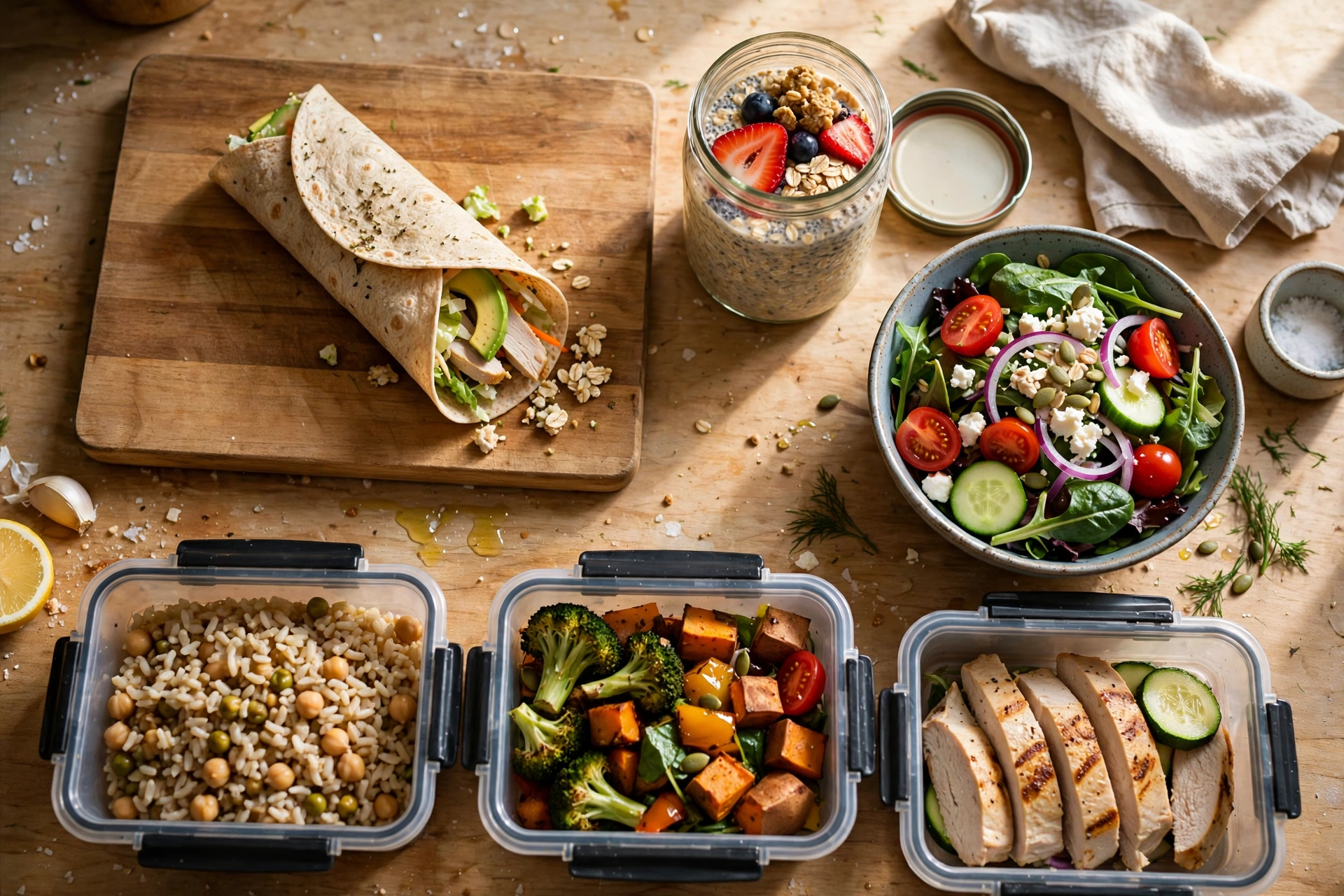
No-cook meal prep means getting several days of meals ready without switching on the hob or the oven once. You wash, chop, mix, and pack — that is the whole job. No cook meal prep ideas work because they are built from foods already ready to eat: overnight oats, a wrap, and a grain bowl of tinned beans and salad can all be ready in one short session.
One board and a few containers are all the session needs — no hot pans, no steam, no pile of washing up.
Table of Contents
- What No-Cook Meal Prep Really Is — and What It Is Not
- Why No-Cook Prep Works So Well in a Small Kitchen
- The No-Cook Pantry and Fridge: What to Keep on Hand
- No Cook Meal Prep Ideas: A Thirty-Minute Session
- No-Cook Breakfast Ideas
- No-Cook Lunch Ideas
- No-Cook Dinner Ideas
- Snacks and Sides That Need No Cooking
- Keeping No-Cook Food Fresh
- Common Mistakes to Avoid
- Frequently Asked Questions
- Conclusion
What No-Cook Meal Prep Really Is — and What It Is Not
No-cook prep is assembling meals from ingredients already ready to eat, served cold or at room temperature, straight from the container. Tinned beans, wraps, cheese, yoghurt, tinned fish, salad leaves, fruit, and dressings are the building blocks.
That makes it different from batch cooking, where one pot of soup feeds you for days. It is also different from a timed cooking session, where several dishes are cooked at once.
No-cook prep has no cooking step at all. Nothing to burn, nothing to cool, no stove to clean — and it is still a planned session, once or twice a week, not random snacking.
Not every meal suits the approach. Anything that needs heat to be safe or pleasant — raw meat, raw fish, dried pasta, dried rice — does not belong here.
Build meals around foods already cooked, preserved, or safe to eat raw. Keep wet and dry parts separate until serving time, and the food stays good for days.
Why No-Cook Prep Works So Well in a Small Kitchen
A small kitchen makes cooking a logistical exercise: one hob ring free, one pan clean, one bit of counter clear. No-cook prep removes all of that.
The session needs a board, a knife, a bowl, and a spoon, used once for the whole week.
It also fits busy days. A session takes about thirty minutes for three or four days of meals, and it can be done in the evening or on a Sunday morning.
Nothing needs cooling, so containers go straight into the fridge. The meals are eaten cold, so there is no reheating at work or at home.
For summer meal prep, the advantage is obvious. A hob running for an hour in a warm room is a small kitchen at its worst — and no-cook prep skips it entirely.
The No-Cook Pantry and Fridge: What to Keep on Hand
No-cook prep works when the ingredients are already in the house. A small stock of ready-to-eat foods turns a prep session into assembly, not shopping.
In the pantry, keep wraps and flatbreads, tinned chickpeas, kidney beans, and butter beans, tinned tuna and sardines, nut butters, nuts and seeds, oats, and crackers. Add jars of olives, pickles, and roasted peppers, plus olive oil, vinegar, soy sauce, mustard, and pesto.
In the fridge, keep salad leaves, cucumbers, tomatoes, carrots, peppers, and spring onions. Add hard cheese, feta, yoghurt, hummus, and eggs, and fruit that holds up well — apples, grapes, berries, and citrus.
Buy with the week in mind: one bag of salad leaves, two cucumbers, a punnet of tomatoes, a loaf of bread, and a pack of wraps cover several days of lunches.
Salad leaves and herbs are the most perishable part of the system, so buy only what you will use within a few days. Everything else on the list keeps for a week or more.
No Cook Meal Prep Ideas: A Thirty-Minute Session
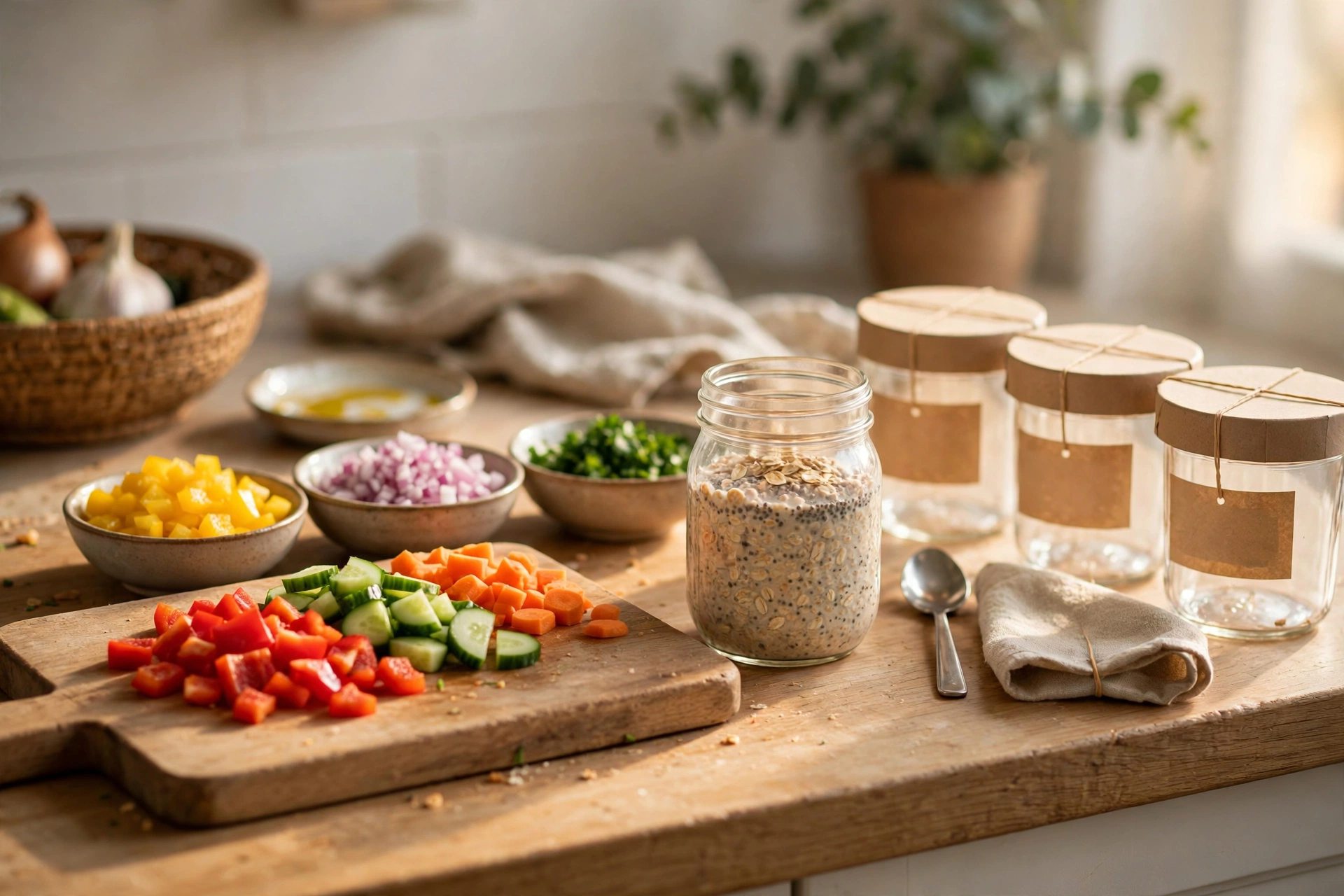
First, choose three or four meals for the next few days and check what you already have. For the planning steps in full, see A Beginner’s Guide to Meal Planning for a Small Household.
Second, set up one workstation: a board, a knife, a bowl, and your containers. Wash and chop all the vegetables in one wave and put them in separate containers, not one big mixed bowl.
Third, build the parts that need time. Mix overnight oats and put the jars in the fridge, and make a big batch of salad base — chickpeas, chopped vegetables, and herbs — stored undressed.
Fourth, assemble the meals. Fill wraps, pack grain bowls, and portion snacks, keeping dressings in small pots to add at eating time.
Fifth, label each container with the contents and the day, put them away by your fridge map, and wash up. The session is done when the kitchen is clean. For keeping the fridge in order once the meals are packed, see Small Fridge Organization for Meal Prep.
No-Cook Breakfast Ideas
Overnight oats, three ways
Overnight oats are the classic no-cook breakfast: oats soaked in milk or yoghurt overnight, ready to eat cold in the morning.
The base is always the same — about 40 to 50 g (roughly half a cup) of rolled oats with about 120 ml (half a cup) of milk or yoghurt. The toppings change: banana and peanut butter, berries and honey, or apple, cinnamon, and walnuts.
Make two or three jars at once.
Yoghurt bowls and fruit
A yoghurt bowl takes two minutes: plain yoghurt, berries or sliced fruit, oats or granola, and a drizzle of honey.
Prep the dry parts — oats, nuts, and seeds — ahead of time, and add the yoghurt and fruit in the morning so the oats stay crunchy.
For more breakfast prep ideas, see How to Meal Prep Breakfasts Ahead of Time.
No-Cook Lunch Ideas
Wraps that hold up
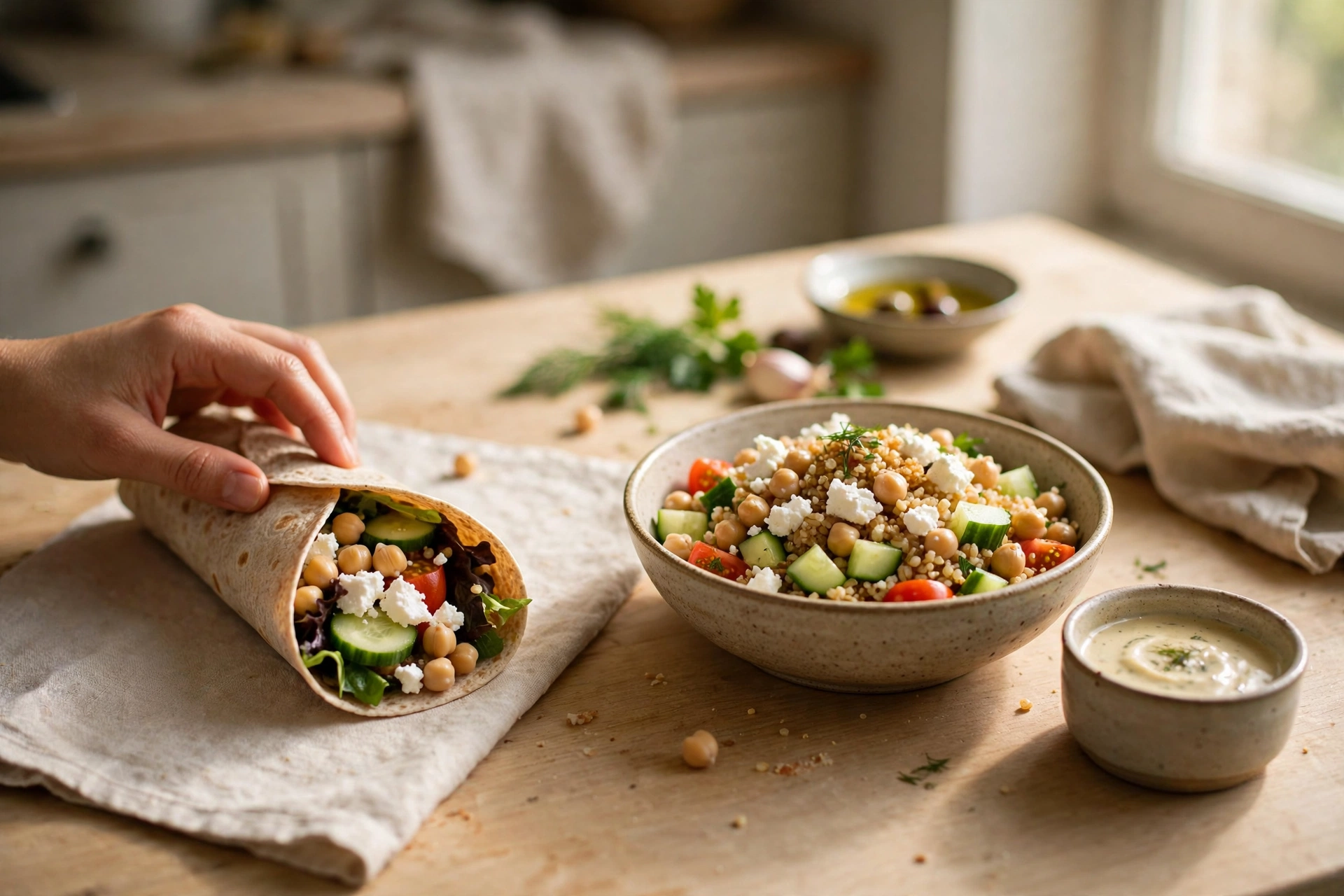
Wraps are the workhorse of no-cook lunch prep: they travel well and eat well cold. Build them so they do not go soggy.
Spread hummus or cream cheese first, as a barrier. Add chickpeas, grated carrot, cucumber, and salad leaves, or tinned tuna with sweetcorn and spring onion. Keep wet dressing in a small pot.
Roll tightly, wrap in greaseproof paper, and store in the fridge. A wrap made the day before is fine, if the dressing stays out until eating time.
Grain bowls from ready-to-eat bases
A grain bowl does not need a freshly cooked grain. Cooked grains bought ready to eat, or cooked earlier in the week, work just as well.
Quinoa or rice with tinned chickpeas, cucumber, tomatoes, feta, and olives is a complete lunch with no cooking on the day. Couscous only needs hot water, so a pot made the evening before can be used cold the next day.
Keep the bowl undressed until serving time.
Salads that last
A salad that lasts three days is a salad with its parts kept separate. Pack the leaves, chopped vegetables, and protein — beans, cheese, or tinned fish — in one container, and the dressing in a small pot to pour over at lunchtime.
A chickpea salad with red onion, cucumber, tomatoes, and herbs keeps well for a few days. A coleslaw of carrot, cabbage, and apple with yoghurt dressing holds up for two or three days, because the cabbage stays crisp.
For the full week of lunches built around these ideas, see How to Prep a Week of Lunches in a Small Kitchen.
No-Cook Dinner Ideas
The mezze plate
A mezze-style dinner feels like a proper dinner: hummus, olives, feta, cucumber and tomatoes, flatbread, and nuts, all from the fridge or the pantry.
The only work is slicing and arranging. Tinned sardines or a boiled egg make it more filling, and a pot of olives or pickles adds the sharp flavour a plate like this needs.
Tinned fish and bean salads
Tinned tuna, sardines, or mackerel with white beans, red onion, and a lemon dressing is a complete dinner with no cooking. Tinned chickpeas with peppers, cucumber, and herbs work the same way.
Eat them the day they are made or the day after. These are dinners for the evenings when cooking is not going to happen — and they still feel like a real meal.
Snacks and Sides That Need No Cooking
Snacks are where no-cook prep saves the most time. A snack that is already packed is a snack you actually eat.
Cut carrot and cucumber sticks, portion hummus into small pots, and add nuts or fruit. Cheese cubes with grapes, or apple slices with peanut butter, need no cooking at all.
For sides, keep pickled vegetables, olives, or grated carrot and raisins in the fridge. They keep for several days and make a plain wrap or bowl fuller.
Keeping No-Cook Food Fresh
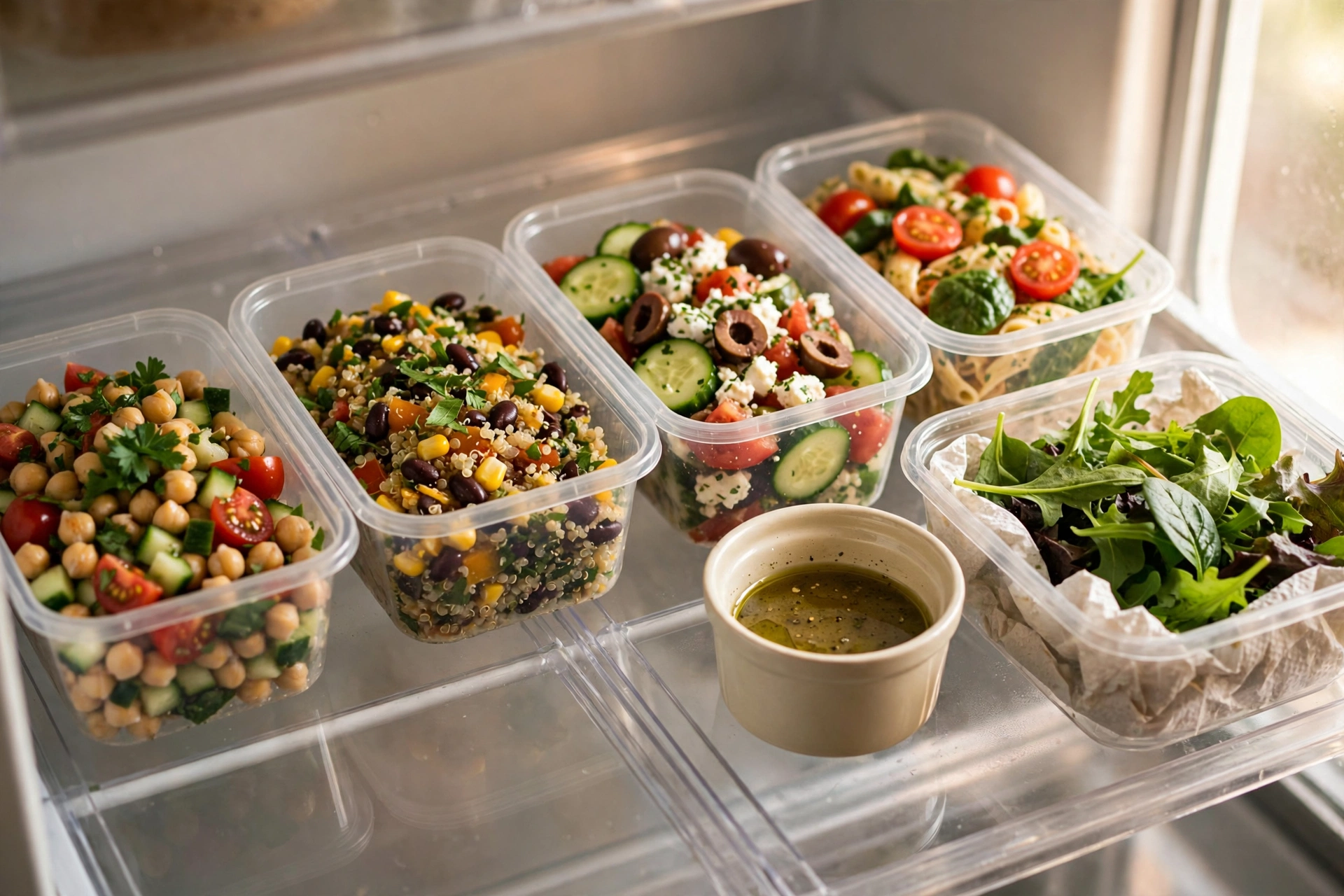
No-cook food stays fresh when its parts are kept apart and dry. Dressings are the main cause of soggy food, so store them separately and add them at eating time.
Salad leaves stay crisp when washed, dried, and stored in a container lined with kitchen paper. Cut fruit keeps better with a squeeze of lemon juice.
Most no-cook meals are best eaten within a few days. The most perishable items — cut fruit, dressed salads, and anything with dairy — should be eaten first.
Label every container with the contents and the day, keep the oldest at the front, and if food looks or smells off, do not eat it. For the full system, see How to Store Meal Prep Containers in a Small Kitchen.
For the freshness system in full, see How to Keep Meal Prep Ingredients Fresh Throughout the Week.
Common Mistakes to Avoid
Dressing salads when you pack them. A dressed salad goes soft within hours — add dressing at eating time.
Mixing everything into one big container. Ingredients stored separately stay crisp for days; mixed together, they go soft.
Prepping a whole week at once. No-cook food is best eaten within a few days — prep for three or four days, then repeat midweek.
Choosing meals that need heat to taste good. Pick foods meant to be eaten cold — wraps, salads, oats, and mezze.
Forgetting a protein. A lunch of only salad and cucumber will not keep you full — add beans, cheese, eggs, tinned fish, or nuts to every meal.
Storing cut fruit and vegetables wet. Wet leaves and fruit go soft fast — dry everything properly first.
Packing a wrap the night before with wet fillings. Tomatoes, pickles, and dressings soak through a wrap overnight — keep wet fillings out, or add hummus or cheese as a barrier.
Frequently Asked Questions
How long do no-cook meal prep meals last in the fridge?
Most are best eaten within a few days: overnight oats, chickpea salads, and grain bowls usually keep well for three or four days, while cut fruit and dressed salads should be eaten sooner. If food looks or smells off, do not eat it.
Can I do no-cook meal prep without a fridge?
Not for more than a day. No-cook meals are still perishable and need to be kept cold — a small fridge, a cool bag with ice packs, or a shared fridge at work is enough. Food left at room temperature for a whole day should not be eaten.
What are the best no-cook meals for hot weather?
Cold meals that need no heat at all: wraps with hummus and salad, grain bowls with tinned beans and feta, overnight oats, and mezze plates.
Do I need special containers for no-cook meal prep?
No. Any clean container with a lid works, but small pots for dressings make a real difference, and clear containers let you see inside without opening the lid.
Is no-cook meal prep healthy?
It can be. Meals built around vegetables, beans, whole grains, fruit, nuts, and yoghurt are naturally balanced, with no added cooking fat because nothing is fried. Watch out for salty dressings, sugary sauces, and too little protein.
Conclusion
No cook meal prep ideas are the simplest way to eat well on busy days in a small kitchen: wash, chop, mix, and pack, with no hob, no oven, and no pile of washing up. Keep a small stock of ready-to-eat foods and prep for three or four days at a time, keeping dressings separate.
Start this week with one short session: overnight oats, two wraps, and a chickpea salad. For the wider system, read Easy Meal Prep Ideas for Small Kitchens.
If counter space is the tight part, see How to Meal Prep with Limited Counter Space. And for a timed cooking session when you do want the hob on, see One-Hour Meal Prep Plan for Busy Weekdays.
4 thoughts on “Simple No-Cook Meal Prep Ideas for Busy Days”