Easy Meal Prep Ideas for Small Kitchens
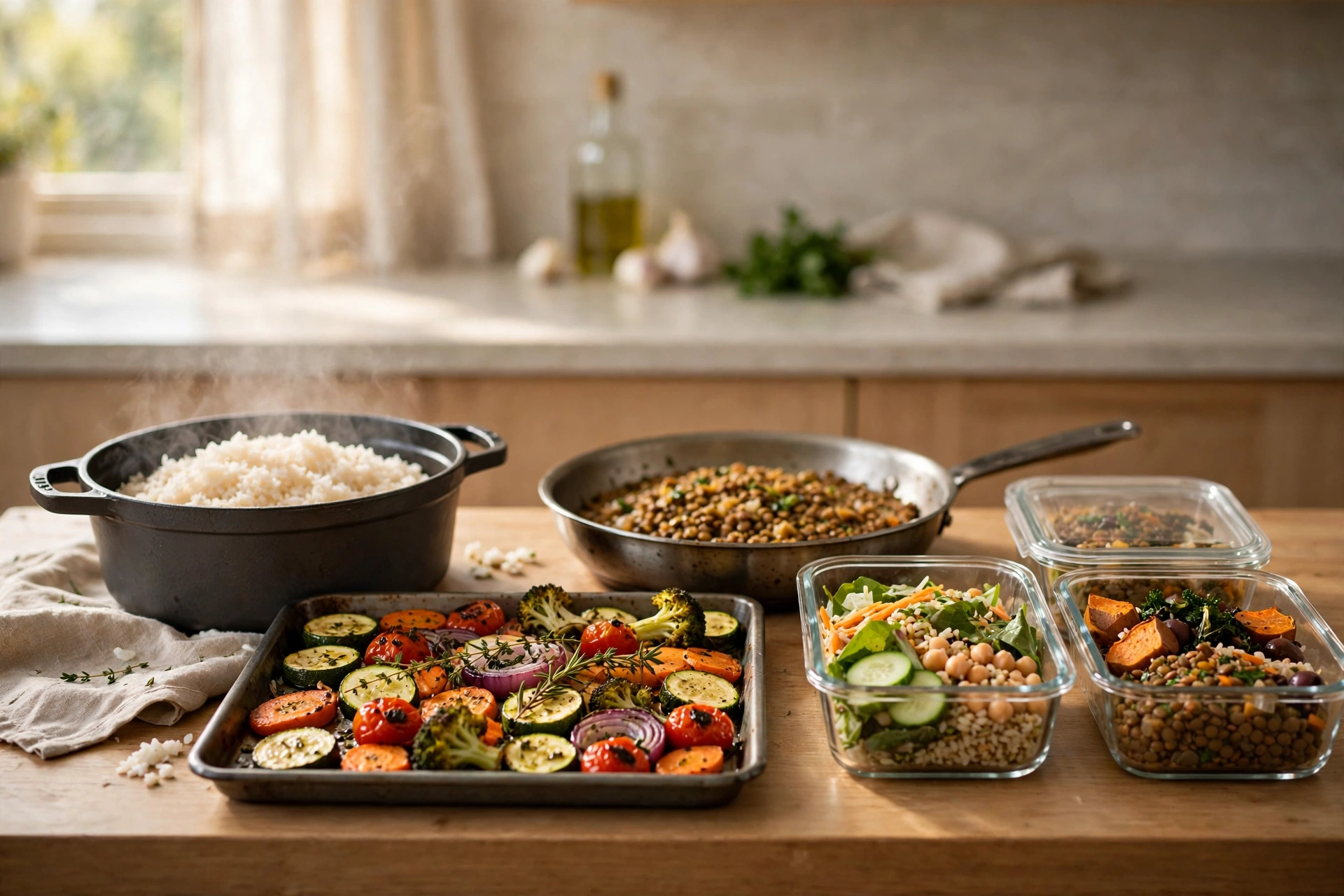
Meal prep ideas for small kitchens work best when they are small too. You do not need a big island, a full set of pans, or a whole afternoon — one grain, one protein, and one tray of vegetables, cooked in a single session and stored in separate containers, can carry a household of one or two through three or four days.
The trick is to prep parts, not finished meals. Cooked rice, roasted vegetables, and a pot of lentils can become a grain bowl on Monday, a wrap on Tuesday, and a soup on Wednesday, so the same ingredients never feel like the same dinner twice.
Table of Contents
- What Small-Kitchen Meal Prep Really Looks Like
- Before You Cook: A Ten-Minute Plan
- Meal Prep Ideas for Small Kitchens: Five Methods That Work
- Breakfast Ideas You Can Make Ahead
- Lunch Ideas That Pack Well
- Dinner Ideas From One Cooking Session
- Cooking With One Pot, One Pan, One Tray
- Containers, Labelling and the Small Fridge
- A First Week of Meal Prep: A Simple Example
- Common Mistakes to Avoid
- Frequently Asked Questions
- Conclusion
What Small-Kitchen Meal Prep Really Looks Like
Most meal prep photos show twenty matching containers lined up on a wide island. A small kitchen does it differently: a pot of rice cooling on the hob, a tray of vegetables in the oven, and three or four containers in a small fridge.
The goal is not to cook every meal for the week in one go. It is to remove the hardest part of weekday cooking — starting from nothing, tired, with an empty counter. When the rice is already cooked and the vegetables are already roasted, dinner becomes assembly: reheat, add a sauce or a topping, and eat.
A household of one or two can usually prep enough in about an hour, with one pot, one pan, and one baking tray. Prep for three or four days, not a full week, because a small fridge cannot hold seven days of food and much of it would go to waste.
Before You Cook: A Ten-Minute Plan
A short plan that gets used beats a detailed one that never leaves the notebook. Before you shop, decide three things: how many meals to prep, which ones, and what you already have.
First, choose the meals. Pick three or four dinners you will actually eat, built around one or two shared ingredients. If rice appears in two dinners and lentils in another, you cook one pot of each, not three separate bases.
Second, check what you already have. Look in the fridge, the freezer, and the pantry before writing a list, and build the plan around anything that needs using up.
In a small kitchen you can see everything at a glance, which is an advantage. For pantry layout, see Small Pantry Organization Ideas for Tight Spaces.
Third, write a short shopping list, grouped by where things are in the shop — vegetables, protein, grains, and everything else — and buy only what the plan needs. A short list keeps the shop quick, the fridge uncluttered, and the spending predictable.
Meal Prep Ideas for Small Kitchens: Five Methods That Work

There is no single right way to prep. These five methods all fit a small kitchen, and most households end up using two or three of them.
Cook once, eat twice
The simplest method of all: when you cook dinner, make double and eat the second half the next day. A pot of soup, a tray of roasted vegetables, or a pan of lentils doubles easily, with the same cooking time and one extra container.
It is meal prep without a separate prep session, and it is the best place to start if you have never prepped before.
Component prep
Component prep means cooking the parts of meals separately, then combining them differently through the week: a grain, a protein, and two vegetables, each in its own container, mixed into bowls, wraps, and salads.
Monday’s rice and vegetables become Tuesday’s wrap filling, so the same ingredients never feel like the same meal twice. This is the method the rest of this article is built around.
One tray, one pot
One-tray and one-pot meals keep the washing up small. A tray of vegetables and a protein roasted together, or a pot of rice, beans, and vegetables in one pan, gives a full meal with one item to wash, and it reheats well.
Assembly meals
Some meals need no cooking at all on the day. Wraps, grain bowls, salads, and sandwiches are assembly meals: wash and chop the salad, cook a grain in advance, then put the meal together in minutes.
They are ideal for lunches, when time is short and the kitchen is shared.
Freezer-friendly batches
A small freezer can hold two or three portions of a cooked meal, ready for a busy day. Soups, stews, curries, and cooked grains freeze well in flat, labelled containers or bags.
Cook a double batch, eat half during the week, and freeze the rest in single portions, following packet guidance for reheating.
Breakfast Ideas You Can Make Ahead
Breakfast prep is the easiest place to start, because breakfasts are small, quick, and repeat well. Overnight oats are the classic example: oats, milk or yoghurt, and fruit mixed in a jar the night before, ready to eat cold in the morning.
Make two or three jars at once and they keep in the fridge for the next few mornings. Boiled eggs are another good start: boil a few, keep them in the fridge in their shells, and peel one each morning — on their own, on toast, or chopped into a salad.
Lunch Ideas That Pack Well
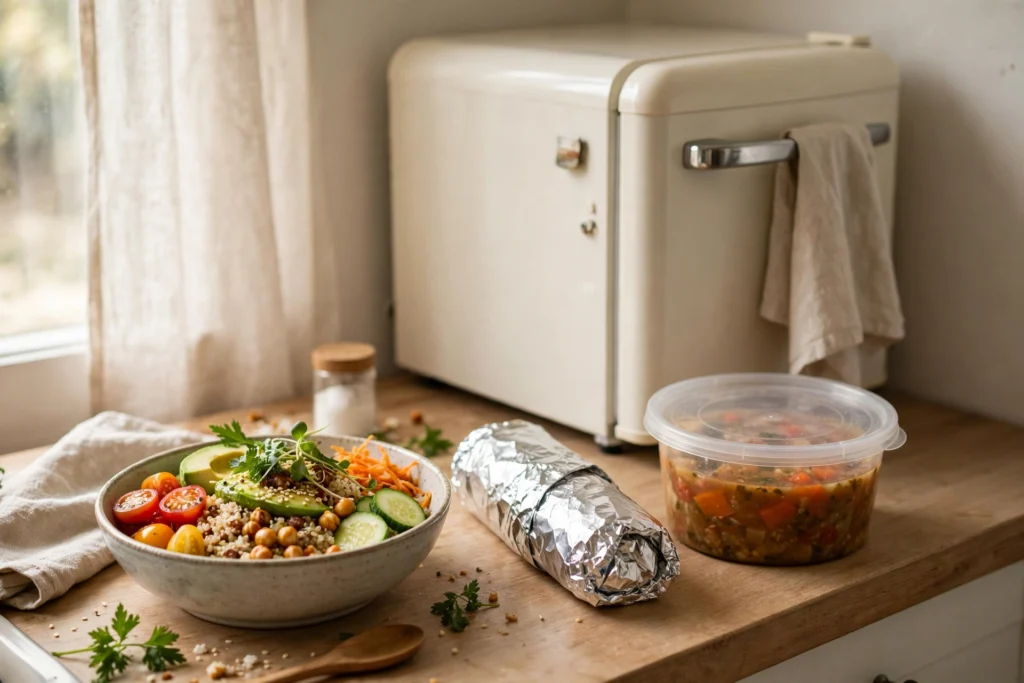
Lunch is where small-kitchen meal prep earns its keep, because a packed lunch is usually assembled in a hurry. A grain bowl is the most flexible option: a base of rice, couscous, or quinoa, a protein such as chickpeas, beans, lentils, or chicken, and roasted or raw vegetables, with the dressing packed separately.
Wraps work the same way: leftover roast vegetables, beans, cheese, or sliced chicken, plus salad leaves, wrapped in foil. A wrap made the night before is a lunch ready to grab.
Soup is a good lunch for colder days: a pot of vegetable or lentil soup, made at the weekend and stored in single portions, reheats in minutes. Make enough for three or four lunches, not one.
Dinner Ideas From One Cooking Session
Dinner prep works best when one session produces two or three different dinners. Roast a tray of vegetables — potatoes, carrots, peppers, courgettes, onions — and use them with rice one night, in a wrap the next, and stirred into pasta on the third.
A pot of lentils or beans is equally flexible: a curry one night, a soup the next, and a filling for a baked potato or a wrap after that. A tomato sauce made with onions, garlic, and tinned tomatoes works with pasta, rice, and beans across the week.
For a timed version of this kind of session, see One-Hour Meal Prep Plan for Busy Weekdays.
Cooking With One Pot, One Pan, One Tray
A small kitchen does not need a full set of equipment for meal prep. One large pot, one frying pan, one baking tray, a chopping board, a knife, and a few containers are enough for almost every idea in this article.
The skill is using them in sequence, not all at once. Start the grain first, because it cooks itself while you do other things. While it simmers, chop the vegetables; while they roast, wash the board and the knife.
Clean as you cook: wash a pan the moment you finish with it and wipe the board between jobs — a clear counter is what lets the next stage begin. For counter habits, see Small Kitchen Counter Organization: Keep Your Counters Clear and Useful.
Containers, Labelling and the Small Fridge

Meal prep fails most often in the fridge, not on the hob: containers that do not stack, lids that do not fit, and food nobody can identify all end in prepped food thrown away.
Use containers that stack neatly and seal properly. Square containers use fridge space better than round ones, and clear or labelled ones let you see what is inside without opening them. For a full guide to matching containers and lids, see How to Organize Food Storage Containers and Lids.
Label every container with what is inside and the date it was made — a small piece of masking tape and a pen is enough. Put the oldest food at the front and the newest at the back, and store sauces and dressings separately, so salads and bowls stay fresh. For fridge layout, see Small Fridge Organization for Meal Prep.
Chill cooked food promptly and use prepped meals within a few days, following packet guidance: if it looks or smells off, do not eat it. For container storage between sessions, see How to Store Meal Prep Containers in a Small Kitchen.
A First Week of Meal Prep: A Simple Example
Here is a simple first plan for a household of one or two: one cooking session of about an hour on a Sunday.
On Sunday, cook a pot of rice, roast a tray of mixed vegetables, and make a pot of lentil soup or a bean stew. While they cook, wash and chop salad vegetables and boil a few eggs, then store each item in its own labelled container. That is the whole session.
Through the week, the rice and vegetables become grain bowls for lunch, the soup becomes two dinners, and the eggs cover breakfast. On Wednesday, cook one fresh meal — a stir-fry or a one-pot pasta — to carry the week to Friday. If the counter feels tight during the session, the wave method helps — see How to Meal Prep with Limited Counter Space.
Common Mistakes to Avoid
Prepping a whole week of meals at once. A small fridge cannot hold seven days of food, and much of it will go to waste. Prep for three or four days, then cook fresh.
Cooking five new recipes in one session. New recipes take longer, use more equipment, and leave more washing up. Start with two or three familiar dishes, and add one new idea at a time.
Forgetting to label containers. Unlabelled food gets opened, sniffed, and put back, then thrown away. Label everything with the contents and the date.
Storing everything in one big container. A large container of rice means opening the whole batch every time. Use smaller containers, so you take out one portion and the rest stays fresh.
Prepping food nobody wants to eat. A week of the same plain chicken and rice gets abandoned by Wednesday. Prep ingredients you enjoy, and vary the meals with a sauce or topping.
Skipping the declutter first. No prep system fixes a kitchen holding twice as much as it should. If the cabinets are full of things you never use, start with How to Declutter a Small Kitchen: A Step-by-Step Guide.
Frequently Asked Questions
How do I start meal prepping in a small kitchen?
Start with one session of about an hour: one grain, one protein or pot of lentils, and one tray of vegetables, stored in separate labelled containers and used across three or four days.
How many meals should I prep at once in a small kitchen?
Prep for three or four days, not a full week — a small fridge holds a few days of containers comfortably. Cook a fresh meal midweek to carry you to the weekend.
What containers are best for meal prep in a small kitchen?
Square containers that stack neatly and seal properly; clear or labelled ones let you see what is inside. Six to eight is usually enough for a household of one or two.
How do I keep prepped food fresh in a small fridge?
Chill cooked food promptly, label every container, put the oldest food at the front, and store sauces separately. Use prepped meals within a few days, following packet guidance.
Can I meal prep without an oven?
Yes. Grains, lentils, beans, soups, and stews all cook on the hob, and vegetables can be steamed or fried in a pan.
Conclusion
Meal prep ideas for small kitchens succeed when they stay small: pick three or four meals, cook one grain, one protein, and one tray of vegetables in a single session, and mix them into different meals through the week. Work in stages, clean as you cook, and store everything in a few labelled containers.
Start this week with one hour, one pot, one pan, and one tray. For your next step, read A Small Kitchen Cleaning and Organization Routine You Can Maintain, which keeps the kitchen ready for the next prep session.
6 thoughts on “Easy Meal Prep Ideas for Small Kitchens”