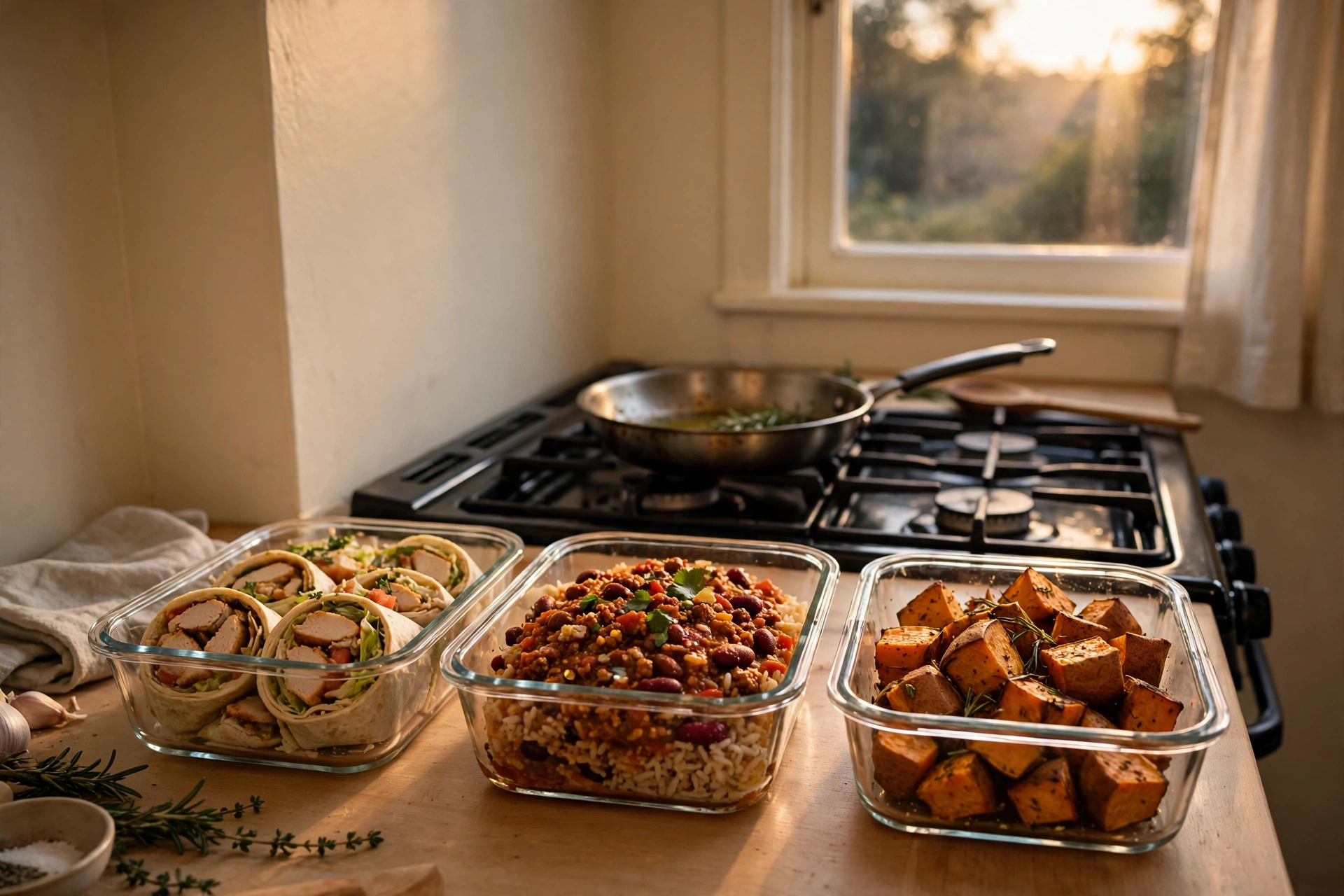
Meal prep dinners are the easiest way to take the pressure off weeknight cooking in a small kitchen. Instead of deciding what to cook at six o’clock with an empty fridge and no counter space, you open the fridge and dinner is already there. One Sunday session can cover three or four nights.
The trick is choosing dinners that suit cooking ahead. A dinner that tastes great on Sunday can turn soggy or dull by Wednesday. This guide covers what makes a dinner prep-friendly, a formula for three dinners from one base, a four-night plan, and a Sunday session.
Table of Contents
- What Makes a Good Prep-Ahead Dinner
- Plan Your Dinners Around the Week, Not the Other Way Round
- The Dinner Formula: One Base, Three Different Dinners
- A Week of Meal Prep Dinners: A Four-Night Plan
- The Sunday Dinner Prep Session, Step by Step
- Packing Dinners So Each Night Feels Fresh
- The Weeknight Routine: From Fridge to Table in Fifteen Minutes
- Freezer Dinners for Nights the Plan Falls Apart
- Common Mistakes to Avoid
- Frequently Asked Questions
- Start With Two Dinners This Sunday
What Makes a Good Prep-Ahead Dinner
A good prep-ahead dinner survives three things: time in the fridge, reheating, and repetition. Saucy dishes, braises, stews, curries, and roasted vegetables hold up well. Crisp fried food, delicate fish, and dressed salads do not, so save those for nights when you cook fresh.
The second test is whether the dinner feels complete on its own. A container of plain rice is a side, not a dinner. Each portion needs a protein, a vegetable, and something starchy or saucy, so nothing is missing when you serve it.
The third test is variety across the week. Three nights of the same stew will bore most people by the third night.
Good meal prep dinners share ingredients but look and taste different, with different sauces, sides, and toppings. For more ideas, see Easy Meal Prep Ideas for Small Kitchens.
Plan Your Dinners Around the Week, Not the Other Way Round
Good dinner prep starts with the calendar, not a recipe list. Look at the coming week and mark the nights you will be home, the nights you will be late, and the nights you already have plans. A plan built on four home dinners works, while a plan built on seven leaves food uneaten.
Then choose three or four dinners that fit those nights. Late nights need dinners that reheat in minutes with no extra work. Relaxed evenings can handle a dinner that needs a fresh side or a quick topping.
Keep the shopping list short. Dinners that share a base, one protein, one grain, and one tray of vegetables, need fewer ingredients and less fridge space.
Write the list from the plan, and check what you already have before you shop. For the full planning-to-shopping flow, see Small Kitchen Meal Prep Workflow: From Grocery Shopping to Storage.
The Dinner Formula: One Base, Three Different Dinners
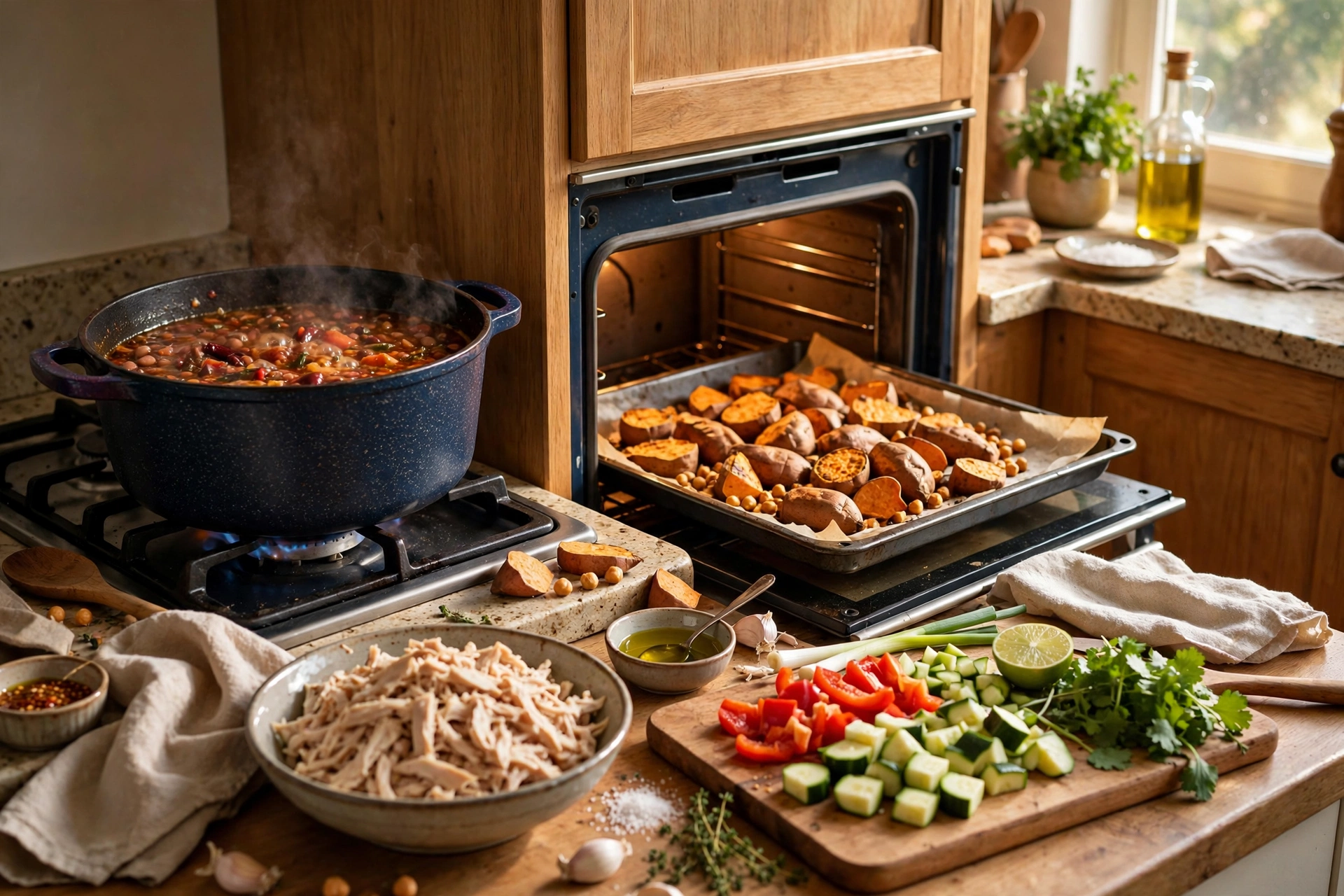
The simplest way to plan meal prep dinners is to cook one generous base, then turn it into three different dinners. You cook once, but nobody feels like they are eating the same meal three nights running. Here are three bases that work well.
Shredded chicken, three ways
Roast or poach two or three chicken breasts, or a small whole chicken, until cooked through, then shred the meat and keep it plain.
Night one, serve it in soft wraps with salad and a spoonful of yoghurt. Night two, stir it through pasta with a tomato sauce. Night three, pile it onto rice with beans and a squeeze of lime.
Keep the chicken plain until serving. Sauce it, season it, or dress it on the night you eat it, so the flavour stays fresh and the texture does not go soggy.
A pot of chilli that covers two nights
A pot of chilli is one of the most forgiving dinners to prep ahead. Beans, minced beef or turkey, tinned tomatoes, onions, and spices go into one pot.
It tastes better the next day, reheats in minutes, and freezes well. For more on cooking big pots in a small space, see Batch Cooking in a Small Kitchen: Tips to Save Time and Space.
Serve it differently each night so it feels new. Night one, ladle it over rice with grated cheese. Night two, spoon it into wraps or over a baked potato.
One pot gives you two distinct dinners, with almost no extra cooking.
Roasted sweet potatoes and chickpeas
Toss cubed sweet potatoes and tinned chickpeas with oil and spices, spread them on one tray, and roast until the edges crisp. The tray gives you a base for two or three dinners.
Night one, serve the tray with couscous and a yoghurt dressing. Night two, pile it into flatbreads with salad. Night three, stir the leftovers into soup, or serve them over greens with a fried egg.
A Week of Meal Prep Dinners: A Four-Night Plan
Here is what a week of meal prep dinners can look like for one or two people, using the bases above. Monday: shredded chicken wraps. Tuesday: chilli over rice.
Wednesday: sweet potato and chickpea flatbreads. Thursday: pasta with shredded chicken and tomato sauce. Friday stays open for leftovers or takeaway.
Notice what the plan does not do. It does not ask you to cook seven dinners, and it does not repeat a single plate.
Four dinners from one session suits most small kitchens: the food stays fresh and the fridge still has room. If you are cooking for two, see Small Kitchen Meal Prep for Couples for portion guidance.
Adjust the plan to your household. Cooking for one? Halve the bases and keep the same four nights.
Cooking for a family? Double the pot of chilli and the tray, not the number of dinners. More portions of the same plan beats more plans.
If you also want lunches covered, see How to Prep a Week of Lunches in a Small Kitchen.
The Sunday Dinner Prep Session, Step by Step
Set aside about ninety minutes on Sunday, or whichever day suits your week. Start the things that cook by themselves, prep while they cook, then pack everything while the last pan finishes.
Step 1: Start the grains and the pot. Put rice or pasta water on, and get the chilli simmering. These need the least attention, so they go first.
Step 2: Roast the tray and cook the chicken. Slide the sweet potato tray into the oven and poach or roast the chicken. Two things cooking at once is plenty in a small kitchen.
Step 3: Prep the fresh bits. Chop the salad vegetables, grate the cheese, and mix any yoghurt dressing. Store each in its own small container, so nothing wilts before its night comes.
Step 4: Cool, portion, and label. Let everything cool, then pack dinner-sized portions and label each with the dish and the night it is for.
Step 5: Reset the kitchen. Wash the pans, wipe the counter, and put the containers in the fridge in night order, with Monday at the front.
For a timed version of this session, see One-Hour Meal Prep Plan for Busy Weekdays.
Packing Dinners So Each Night Feels Fresh

Packing by portion, not by ingredient, makes weeknights easy. Each container should hold one full dinner portion, protein, vegetables, and grain together, so serving is a single trip to the hob or microwave. Keep sauces and dressings in small pots, so they do not soak into everything else.
Use containers that fit your fridge. Stackable rectangular containers use space better than round ones, and a single layer with Monday at the front saves you digging. For a fuller guide to fridge layout, see Small Fridge Organization for Meal Prep.
Storage times matter, so keep the window short. The FDA’s advice on storing food safely explains that cooked leftovers belong in the fridge for only a few days, so four dinners from Sunday is about right. By Friday, freeze or throw away anything left.
The Weeknight Routine: From Fridge to Table in Fifteen Minutes

Meal prep dinners should take fifteen minutes from fridge to table. Take the container out, reheat it gently, and use those minutes to set the table and add anything fresh, like salad, lemon, or yoghurt.
Reheat the main dish first, then add the fresh toppings while it heats. That order keeps the salad crisp and the yoghurt cool. Eating from a plate, rather than the container, also makes a reheated dinner feel like a proper meal.
Freezer Dinners for Nights the Plan Falls Apart
Even a good plan has a bad week, so keep one or two meal prep dinners in the freezer for nights when cooking feels like too much. A portion of chilli, soup, or stew freezes well and only needs defrosting and heating.
Freeze dinners in single portions, flat in bags or in stackable containers, and label them with the dish and the date. For a fuller guide, see Freezer Meal Prep for Small Kitchens: Planning and Storage Tips.
Treat the freezer as a backup, not a second fridge. Replace each freezer dinner you use the next time you cook. One or two portions is enough.
Common Mistakes to Avoid
Most problems with meal prep dinners come from a handful of avoidable choices. Here are the ones that trip people up most. For the full list of small-kitchen prep errors, see Meal Prep Mistakes to Avoid in a Small Kitchen.
Planning dinners for nights you will not be home. A dinner planned for a night you eat out goes uneaten. Check the calendar first, and only prep for the nights you will actually be at the table.
Prepping a main dish but forgetting the side. Chilli with no rice cooked, or wraps with nothing to fill them, leaves the dinner half done. Every dinner needs its side cooked or bought before the week starts.
Making every dinner from the same base in the same way. One base is efficient, but three nights of the same sauce and side will feel like one long meal. Change the sauce, the side, or the topping each night.
Packing portions that do not match the eater. A container sized for a family leaves one person with too much food, while a small box leaves a hungry eater raiding the snack cupboard. Size each portion to the person who will eat it.
Seasoning once and never tasting again. Food tastes blander when it is cold, and a dinner seasoned on Sunday can taste flat on Wednesday. Taste each dinner after reheating, and adjust the salt, lemon, or chilli before serving.
Prepping dinners that still need fresh cooking on the night. A dinner that needs freshly fried eggs, boiled pasta, or a just-made sauce every evening has not really been prepped. Choose dinners that only need reheating, and save fresh-cooking meals for open nights.
Frequently Asked Questions
What meal prep dinners are best if I get home late?
Choose dinners that reheat in one pot and need no fresh side. A stew, curry, or chilli served straight from the bowl with bread is ideal, because there is nothing to chop or time.
Keep one as your designated late-night dinner, and save the dinners with salads and toppings for evenings with a few extra minutes.
How do I keep meal prep dinners interesting by Thursday?
Give Thursday the most different dinner of the week. Use a topping you have been saving, like toasted nuts or fresh herbs, and change the side completely, such as flatbread instead of rice. A small change on the plate makes a familiar base feel new.
What should I do with prepped dinners I did not eat?
Freeze them as soon as you know you will not eat them, and label the container with the dish and the date. Leftovers can also be repurposed: chilli becomes a wrap filling, and roasted vegetables stir into pasta. If a dinner has sat in the fridge past the safe window, throw it away.
Can I meal prep dinners if my evenings change every week?
Yes, but prep flexible bases instead of fixed dinners. Cook plain grains, a tray of roasted vegetables, and a pot of something saucy, then decide each morning which combination becomes dinner. A late meeting then changes only the combination, not the whole week.
Start With Two Dinners This Sunday
You do not need a perfect system to start. Pick two dinners you already like, cook them in one session this Sunday, and see how the week feels. Two meal prep dinners will show you what works before you commit to a full plan.
Once those two nights feel easy, add a third dinner and a freezer backup. Small kitchens reward small steps.