
Meal prep without microwave sounds like a handicap, but it is really just a different way of finishing your food. Most prepped meals reheat beautifully on the hob, in the oven, or in a small air fryer, and plenty of them taste just as good cold.
If your microwave broke, your kitchen has no room for one, or your office does not have one, you can still prep a full week of lunches and dinners. This guide shows you which dishes to choose, five ways to reheat them, and a simple weekly session.
Table of Contents
- What Meal Prep Without Microwave Really Means
- Why Skipping the Microwave Changes So Little
- Dishes That Work Best for Meal Prep Without Microwave
- Five Ways to Reheat Without a Microwave
- Your First Microwave-Free Prep Session, Step by Step
- Packing Lunches for Work Without a Microwave
- Containers That Make Meal Prep Without Microwave Easier
- Common Mistakes to Avoid
- Frequently Asked Questions
- Start With One Microwave-Free Week
What Meal Prep Without Microwave Really Means
Meal prep without microwave means you skip one appliance, not the whole idea of prepping ahead. You still cook in a batch, portion it into containers, and store it in the fridge or freezer. Only the reheating changes.
Some people choose this because they prefer food reheated in a pan or oven. Others land here by circumstance: a broken microwave, a kitchen too small for one, or a workplace with no microwave. Either way, the weekly routine barely changes.
It does not mean eating cold food all week unless you want to. Plenty of prepped meals are designed to be eaten cold, and the rest reheat with a little more time and care than a microwave needs.
Why Skipping the Microwave Changes So Little
A microwave is a shortcut, not a requirement. Before microwaves became common, every leftover was reheated in a pan, in the oven, or in a steamer, and the food was fine.
Some dishes actually come back better without one. Roast vegetables crisp up again in a hot oven, a pan brings a curry sauce back to life, and a frittata slice warms gently on the hob instead of turning rubbery.
The trade-off is time. Reheating on the hob or in the oven takes five to fifteen minutes instead of two, so start it while you set the table or change out of your work clothes.
Dishes That Work Best for Meal Prep Without Microwave
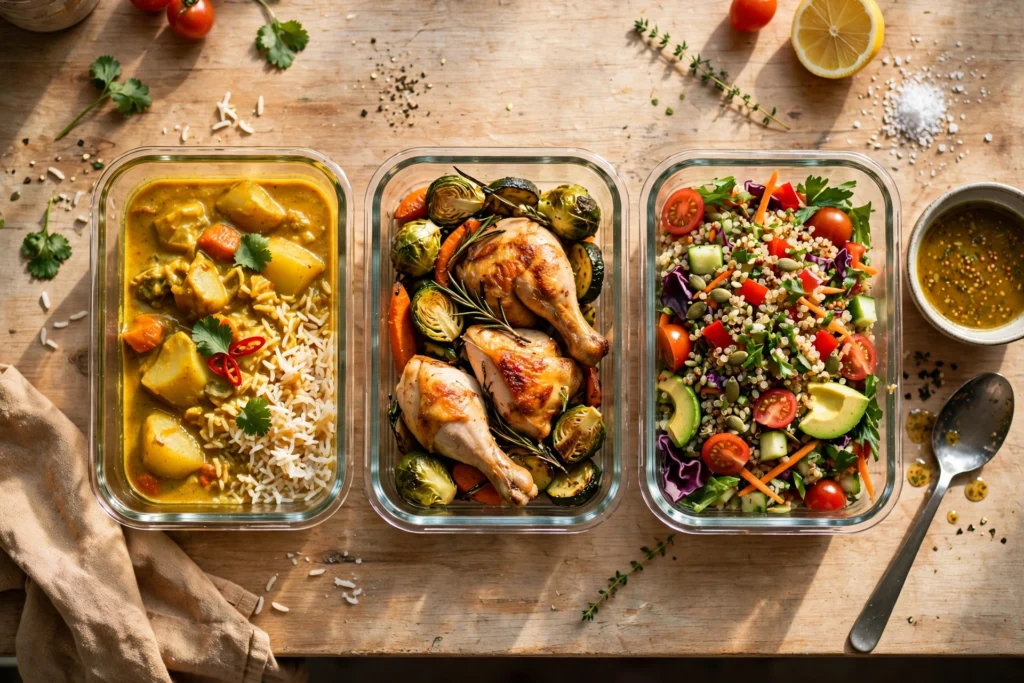
The easiest way to make meal prep without microwave work is to choose dishes that suit the reheating method you have. Saucy dishes, roasts, soups, and cold-friendly meals all behave well.
Saucy dishes and stews
Curries, chilli, stews, and pasta sauces are the safest place to start. They reheat in a pan over a medium-low heat with a splash of water, and the sauce keeps everything moist while it warms. One double batch gives you four or five dinners.
Roast and tray-bake meals
Roast chicken thighs, tray-bake vegetables, and roasted potatoes reheat well in the oven, where the dry heat brings back their crisp edges. Spread them in a single layer and give them ten to fifteen minutes at a moderate heat.
Soups and one-pot meals
Soup is one of the simplest prepped meals to reheat without a microwave. Pour it into a small pan, warm it gently, and stir now and then until it is steaming all the way through.
Breakfasts that reheat or travel cold
Overnight oats, yoghurt bowls, and fruit need no reheating at all, and a frittata slice is pleasant cold or warmed in a pan for a minute on each side. For more ideas that work ahead of time, see How to Meal Prep Breakfasts Ahead of Time.
Cold-friendly lunches
Grain bowls, wraps, salads, and mezze-style plates are built to be eaten cold, so they suit a microwave-free week. Prep the parts separately — grains in one container, salad in another, dressing in a small pot — and assemble them when you eat. For a full set of ideas, see Simple No-Cook Meal Prep Ideas for Busy Days.
Five Ways to Reheat Without a Microwave
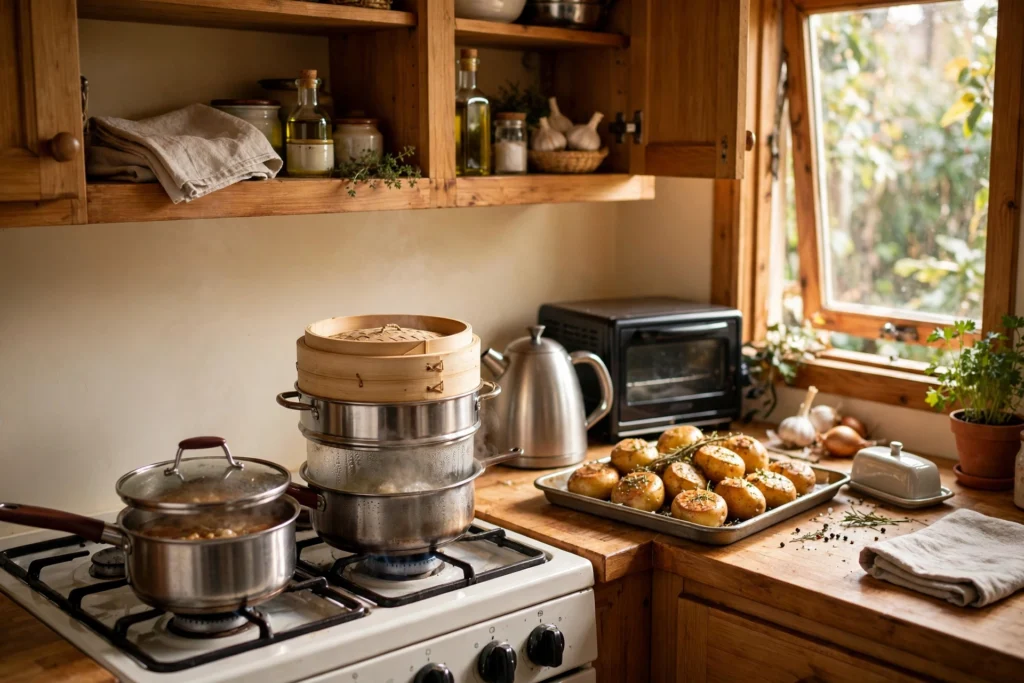
You do not need special equipment to reheat prepped food. Most small kitchens already have everything required: a pan with a lid, an oven or toaster oven, and a kettle.
On the hob
The hob is your most flexible reheating tool. Tip the portion into a small pan, add a splash of water or stock, put the lid on, and warm it over a medium-low heat, stirring once or twice. The lid traps steam, so grains warm through without drying out.
In the oven or toaster oven
The oven suits larger portions and anything you want crisp again. Put the food in an oven-safe dish, cover it if it might dry out, and heat it until it is hot all the way through. A toaster oven does the same job for a single portion and heats up faster.
In an air fryer
An air fryer is handy for small portions that should stay crisp: roast potatoes, chicken pieces, or a slice of frittata. Spread the food in a single layer and shake the basket halfway through.
With a kettle and hot water
A kettle covers the gaps. Pour boiling water over noodles or couscous and leave them covered for a few minutes, or set a sealed container of soup in a bowl of hot water to warm it gently.
In a steamer basket
A steamer basket over simmering water reheats rice, vegetables, and dumplings gently and keeps them moist. Put the food in a heatproof bowl inside the basket, cover the pan, and give it a few minutes.
Your First Microwave-Free Prep Session, Step by Step
One session of about an hour sets up most of the week. Pick one saucy dish, one roast, and one cold-friendly lunch, and cook them together, using the hob and the oven at the same time.
- Choose three dishes for the week and check what you already have in the fridge and pantry. One saucy dish, one roast, and one cold lunch cover most days.
- Start the longest dish first, usually the roast or the stew, and let it cook while you prep the cold lunch parts. Wash and chop the salad vegetables and cook the grains.
- Portion everything into single-serving containers as soon as it is cooked. Small portions reheat faster and more evenly than one big tub, and you can grab exactly what you need.
- Put the containers away with the earliest meals at the front, so you reach for the right one first. For a fridge layout that keeps prepped food easy to find, see Small Fridge Organization for Meal Prep.
- Freeze any portions you will not eat within a few days. For the freezing and thawing routine, see Freezer Meal Prep for Small Kitchens: Planning and Storage Tips.
- Wash the pans, wipe the counters, and put everything away before you sit down. A clean kitchen at the end of the session is what makes you willing to do it again next week. For the wider planning steps, see How to Meal Prep Dinners in a Small Kitchen.
Packing Lunches for Work Without a Microwave

Meal prep without microwave matters most at work, where the microwave is usually the only reheating option. Decide before the week starts which lunches will be eaten cold and which will travel in a flask, because that choice shapes what you cook.
Cold lunches are the simplest option: grain bowls, wraps, and salads travel well in an insulated bag with an ice pack and are ready the moment you open them. They are also the most reliable choice if you are unsure what your workplace offers.
For a hot lunch, a vacuum flask is the usual answer. Fill it with soup, stew, or curry just before you leave, and it stays hot until lunchtime. Pack the flask last, so it loses as little heat as possible.
Check what your workplace actually offers before you plan the week. A kettle, a toaster, or a shared oven changes the options, and knowing that in advance stops you packing a lunch you cannot reheat. For a full week of lunch ideas, see How to Prep a Week of Lunches in a Small Kitchen.
Containers That Make Meal Prep Without Microwave Easier
The right container matters more in meal prep without microwave, because it often goes into the oven or onto the hob. Glass containers with lids are the most useful: they go from fridge to oven, they do not stain, and they last for years.
Never put a plastic container in the oven, even on a low heat, and keep plastic lids off food reheating in a pan. Transfer the portion to a pan or an oven-safe dish first, and the container stays in good shape.
Keep portions to a single serving, about one to two cups. Stack the containers with the lids on, and store the lids separately if space is tight. For the full storage routine, see How to Store Meal Prep Containers in a Small Kitchen.
Label every container with the dish and the date it was cooked. A small piece of tape and a pen is enough, and it stops you guessing which tub is Tuesday’s lunch and which is last week’s. For keeping ingredients fresh, see How to Keep Meal Prep Ingredients Fresh Throughout the Week.
Common Mistakes to Avoid
These five mistakes cause most of the disappointment in meal prep without microwave, and each one has a simple fix.
Reheating on high heat. A fierce heat scorches the bottom of the pan while the middle stays cold. Use a medium-low heat and give the food time, stirring once or twice.
Reheating the same portion twice. Food that has been reheated once and cooled again should not go through the cycle a second time. Reheat only the portion you plan to eat.
Forgetting to thaw frozen meals. A frozen portion will not reheat evenly, and the outside can dry out while the centre is still cold. Move it to the fridge the night before.
Leaving cooked food out too long. Cooked food should go into containers and into the fridge once it has stopped steaming, rather than sitting on the counter for hours.
Choosing dishes that go soggy. Chips, fried food, and crisp flatbreads lose their texture when reheated, and they are rarely good cold either. Save those for fresh cooking.
For a wider list of planning mistakes, see Meal Prep Mistakes to Avoid in a Small Kitchen.
Frequently Asked Questions
Can I reheat rice without a microwave?
Yes. Tip the rice into a small pan, sprinkle over a tablespoon or two of water, put the lid on, and warm it over a low heat for a few minutes. The steam loosens the grains, and a quick stir halfway stops them sticking.
How long can a packed lunch sit in a bag before eating?
Keep it chilled with an ice pack and eat it within a few hours of leaving home. A lunch bag left in a warm car or on a sunny desk warms up fast, so keep it somewhere cool until lunchtime.
Is it safe to eat meal prep cold?
Yes, as long as the food was cooked properly, chilled promptly, and eaten within a few days. Dishes designed to be eaten cold, such as grain bowls and salads, are the safest bet. The FDA’s guide to storing food safely explains how long cooked food keeps.
Can I use a slow cooker to reheat meal prep?
It is better not to. A slow cooker warms food gradually, so a cold portion spends a long time lukewarm before it is hot. Use it for cooking the batch, and reheat single portions on the hob or in the oven.
What if I only have a hob and a kettle?
That is enough for most of the week. The hob reheats sauces, soups, stews, and grains, and the kettle covers noodles, couscous, and hot water for a flask. Add a small oven later if you want crisp reheating, but you can start without one.
Start With One Microwave-Free Week
Meal prep without microwave is less of a change than it sounds. Pick three dishes you already like, reheat them on the hob or in the oven for a week, and notice how little you miss the microwave.
Start this weekend with one saucy dish, one roast, and one cold lunch. Pack them in single portions, label them, and see how the week feels.