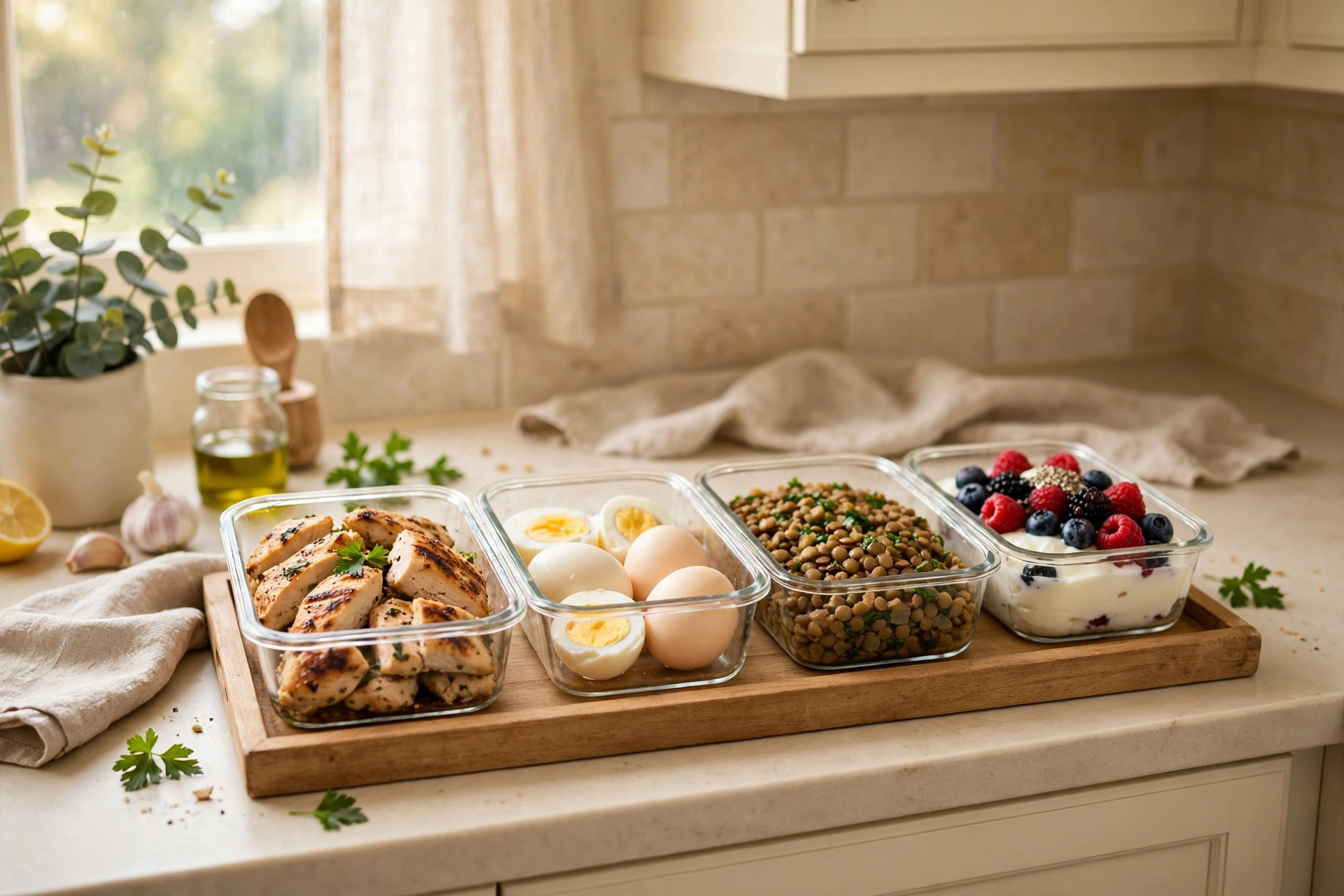
High protein meal prep works in a small kitchen when you plan around the protein first. Pick two or three proteins, cook them in one session, then build your meals around them for the week. You do not need extra gadgets, a second fridge or a long counter to eat well.
Most people start with recipes instead of portions. A recipe can be lovely and still leave you hungry by three in the afternoon. Start with the protein, add a filling base and something fresh.
Table of Contents
- What High Protein Meal Prep Means in a Small Kitchen
- How Much Protein Belongs on the Plate
- Protein Sources That Suit a Small Kitchen
- The Protein-First Plate Formula
- Seven High Protein Meal Prep Ideas That Fit a Small Kitchen
- A 60-Minute High-Protein Prep Session, Step by Step
- Storing Protein Safely in a Small Fridge
- Keeping Protein Meals Interesting All Week
- Common Mistakes to Avoid
- Frequently Asked Questions
- Conclusion
What High Protein Meal Prep Means in a Small Kitchen
High protein meal prep simply means protein leads the planning. Instead of cooking a side dish and adding whatever meat or beans happen to be around, you choose the protein first and let it shape the meal. That keeps portions honest.
A small kitchen rewards this approach because protein needs the most care: the pan, the oven or the pot, plus fridge space once cooked. Grains and vegetables can wait.
People often assume high-protein eating means the same chicken breast every day. It does not. Eggs, lentils, yoghurt, tinned fish, tofu and mince all count, and rotating them keeps meals varied and budgets healthier.
How Much Protein Belongs on the Plate
Think of the plate in thirds, with protein taking the largest share. Fill about half with protein and vegetables, then add a smaller share of grains. This keeps meals filling without crowding the container.
A palm-sized portion of protein foods at each main meal is a practical guide for most adults. If your plate looks balanced and you feel full for a few hours, the system is working.
Breakfast deserves the same attention as lunch and dinner. A morning built on toast alone fades fast, while eggs, yoghurt or cottage cheese carry you through to lunch. Prep your breakfasts ahead of time, and mornings stop feeling rushed.
Protein Sources That Suit a Small Kitchen
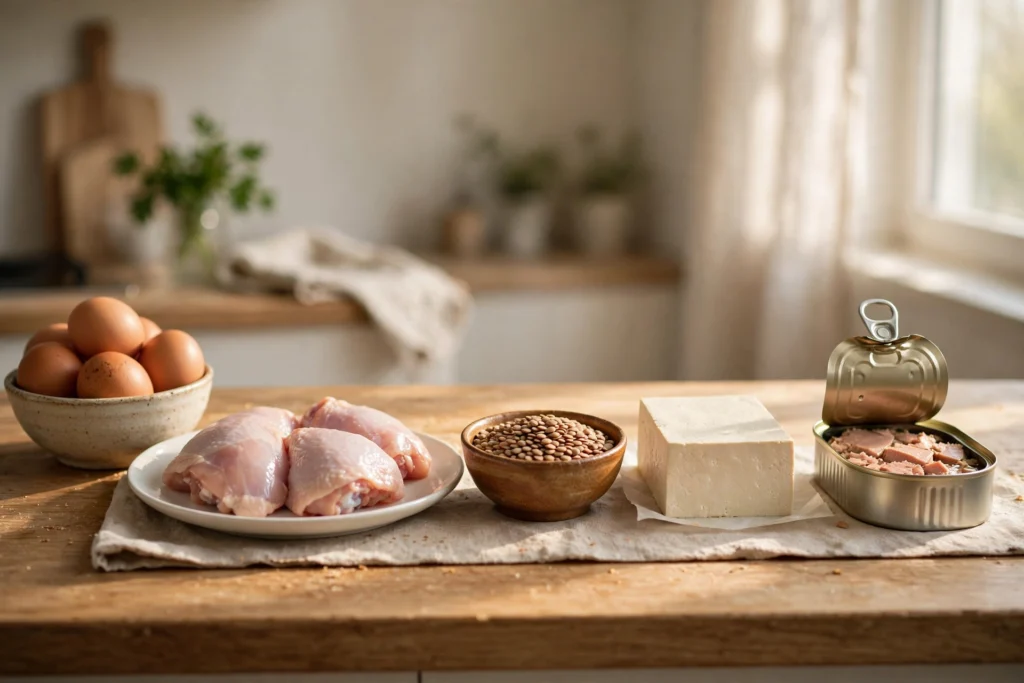
Not every protein suits a small kitchen. The best choices for high protein meal prep cook quickly, store neatly and reheat without turning tough or dry. One needing three pans is a poor fit.
Quick-Cook Animal Proteins
Eggs are the easiest protein a small kitchen can hold. They boil in one small pot, fry in minutes and work at any meal. Boil a batch on prep day for grab-and-go protein all week.
Chicken thighs suit small kitchens better than whole birds or large roasts. They cook fast in one pan, stay moist when reheated and slice easily into bowls, wraps and salads. Cook a tray and portion it warm.
Tinned fish is the backup every small kitchen needs. Tuna, sardines and salmon need no cooking and keep in the cupboard for months. They turn a plain grain bowl or salad into a proper meal in minutes.
Plant Proteins That Store Well
Lentils are cheap, filling and forgiving. Red lentils cook in about twenty minutes with no soaking, while brown and green lentils hold their shape in salads. Cook a large pot and use it across three or four meals.
Beans work the same way, whether you cook dried beans in a batch or open a tin. Chickpeas roast well, black beans suit grain bowls and kidney beans thicken a chilli. Rinse tinned beans and they are ready.
Tofu earns its place by taking on whatever flavour you give it. Press it briefly, cube it, then bake or pan-fry it in a single layer. It keeps for a few days, hot in stir-fries or cold in noodle bowls.
No-Cook Protein for Busy Days
Some days you will not cook at all, and that is fine. Yoghurt, cottage cheese, hummus and sliced cheese all add protein with zero cooking. Keep one in the fridge as your safety net, plus a boiled egg or two for the gap between meals.
The Protein-First Plate Formula
The protein-first plate formula is the simplest tool in high protein meal prep. Start with a protein, add a base, add vegetables, then finish with a flavour. Four steps to a meal that fills you up.
Your base can be rice, pasta, potatoes, bread or a grain like quinoa. Cook one base in a large batch and use it under different proteins all week. A base that reheats well saves you a cooking step every day.
Vegetables bring crunch, colour and bulk to the plate. Raw ones like cucumber, carrots and peppers need no cooking and freshen a reheated meal. Roasted vegetables cook on the same tray.
Flavour comes last, and it matters more than people think. A spoonful of salsa, a squeeze of lemon or a pinch of herbs can make the same chicken feel like a different meal. Keep two or three sauces in the fridge.
Seven High Protein Meal Prep Ideas That Fit a Small Kitchen

These ideas use one pan, one pot or one tray each, so high protein meal prep never asks for more space than a small kitchen has. Pick two or three, cook them in one session and mix them across the week. The easy meal prep ideas for small kitchens pair well with them.
1. Sheet-Pan Chicken Thighs and Vegetables
Toss chicken thighs with chopped peppers, courgettes and red onion on a tray. Roast until the chicken is cooked through and the vegetables catch a little colour. One tray, one wash-up, four portions.
2. Lentil and Bean Stew
Simmer lentils with tinned tomatoes, garlic and beans in one pot. It thickens as it cooks and tastes better the next day. Portion it while it is still warm.
3. Egg and Vegetable Muffins
Whisk a dozen eggs with chopped spinach, peppers and cheese, then bake in a muffin tin. They cool fast, stack neatly and reheat in under a minute. Two with fruit make a breakfast that lasts till lunch.
4. Tofu and Noodle Bowls
Pan-fry cubed tofu until crisp, then toss it with cooked noodles, shredded carrot and a soy and sesame dressing. Pack the dressing separately so the noodles stay springy.
5. Chickpea and Tuna Grain Bowls
Combine cooked quinoa or rice with tinned tuna, chickpeas, cucumber and lemon dressing. Nothing needs cooking on the day you eat it. Plan five from one base, as the week of lunches guide shows.
6. Turkey Mince and Bean Chilli
Brown turkey mince in a pot, add tinned tomatoes, kidney beans and spices, then simmer until thick. This is batch cooking at its simplest: cook a double batch and freeze half. Serve over rice or with bread, as one of your meal prep dinners.
7. Yoghurt and Berry Breakfast Pots
Layer thick yoghurt with berries and a spoonful of oats in small pots. They take five minutes to assemble and keep for three or four days. Add nuts or seeds in the morning.
A 60-Minute High-Protein Prep Session, Step by Step
A focused hour of high protein meal prep can set up the week. Cook in the right order, so nothing waits around while something else finishes. Start with the longest job first.
- Put a pot of grains on first; rice or quinoa cooks itself while you do everything else.
- Boil a batch of eggs in a second small pot while the grains simmer.
- Slide a tray of chicken thighs and vegetables into the oven.
- While the oven works, cook lentils or a bean stew.
- Chop vegetables and wash salad leaves while the pots bubble.
- Cool for ten minutes, then portion into containers.
- Label each container with its eating day.
Work on one protein at a time rather than juggling three pans at once. A calm, ordered session beats a frantic one, and you finish with a clean counter.
If you are short on counter space, this session still works. Clear the counter before you begin, use a tray over the sink as extra space, and wash each pot as soon as it is empty. The guide to meal prep with limited counter space has more ideas.
Storing Protein Safely in a Small Fridge

In a high protein meal prep routine, cooked protein needs the coldest part of the fridge, usually the back of a shelf. Push containers to the back, where the temperature stays steadiest, and keep raw meat on the lowest shelf so nothing drips onto ready food. The FDA’s guide to storing food safely explains the rules in plain language.
Cool cooked food before it goes in the fridge, but do not leave it sitting out for hours. Spread it on a tray or divide it into shallow containers so it cools quickly, then refrigerate it within two hours. Hot food in a sealed container warms the fridge.
Use clear, stackable containers so you can see what is inside without opening every box. Label each one with its contents and cooking date, and eat the oldest first. A small fridge fills fast, so the small fridge organization guide shows how to give each one a fixed home.
Cooked chicken, mince dishes and stews keep for three to four days in the fridge, while boiled eggs last about a week in their shells. Freeze anything you will not eat in that window, portioned first so you only thaw what you need. The guide to keeping meal prep ingredients fresh covers habits that protect flavour.
Keeping Protein Meals Interesting All Week
Boredom is the quiet reason most meal prep plans fail. The same chicken and rice, eaten the same way five days running, stops feeling like a meal and starts feeling like a chore. Variety is not a luxury; it keeps the system going.
Change the sauce before you change the protein, and change the temperature too. A chicken portion tastes different with tomato salsa, peanut dressing or herby yoghurt sauce, and a protein that was hot on Monday can be cold in a salad on Wednesday. That variety can carry you through a whole week.
Common Mistakes to Avoid
Most meal prep mistakes come down to planning, not cooking. Watch for these three and the week runs far more smoothly.
Overfilling containers with grains. Grains swell and crowd the box, leaving no room for the protein that matters. Fill containers halfway with the base, then add protein and vegetables on top.
Prepping food you will not eat by Thursday. Cooked meals have a short window, so plan for three or four days and freeze the rest. A short session midweek beats a fridge full of food you throw away.
Using containers that leak. Thin lids and cracked boxes spill dressing around the fridge and ruin the meal underneath. Test each container with water before you trust it with a saucy lunch.
Frequently Asked Questions
Can I use protein powder in high protein meal prep?
Yes, and it works best in foods you already make. Stir it into overnight oats, yoghurt or a smoothie base the night before, and the meal is ready when you are. Avoid hot dishes, where it can clump.
How do I keep a protein lunch safe without a fridge at work?
Pack it in an insulated bag with a frozen ice pack, and eat it within a few hours of leaving home. Choose foods that travel well, like a grain bowl or a wrap, and keep dressings separate. If your workplace has a fridge, use it.
How do I stop reheated chicken from drying out?
Reheat it gently with a splash of water or stock, and cover the container so the steam stays in. Slice the chicken first so the heat reaches it evenly. Medium power works better than full power.
Can I do high protein meal prep if I have no freezer?
Yes, just prep for three or four days at a time instead of a full week. Choose proteins that keep well in the fridge, like boiled eggs, lentils and yoghurt, and cook a small top-up midweek. A shorter cycle stays fresh without a freezer.
What if people in my household want different amounts of protein?
Cook one shared base and one shared vegetable, then portion the protein separately so each person takes the amount that suits them and nobody eats a different meal. Cooking for one instead? The meal prep for one person guide scales these portions down.
Conclusion
High protein meal prep is less about willpower and more about a simple system. Start this weekend with one idea from the list above — a tray of chicken, a pot of lentils or a batch of boiled eggs — and add a second protein next week.