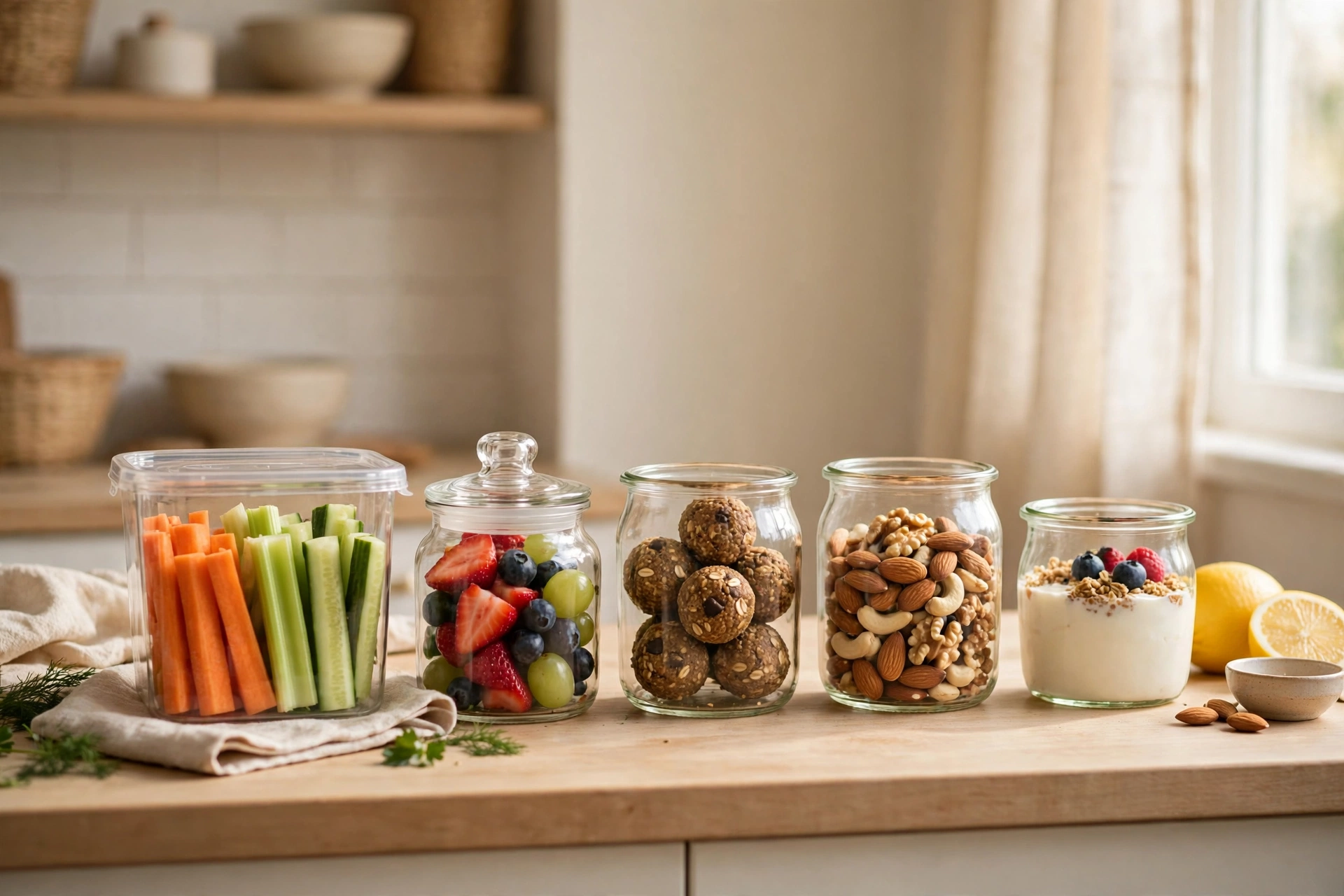
Meal prep snacks turn the afternoon slump into a two-minute decision instead of a hunt through cupboards. When a ready snack is sitting in the fridge, you eat it. When nothing is ready, you grab whatever is closest, and that is rarely the thing you wanted.
You do not need a big kitchen, a second fridge or a long Sunday session to make this work. One short prep slot, a handful of small containers and a plan for the week are enough.
Table of Contents
- What Meal Prep Snacks Means in a Small Kitchen
- How Many Snacks to Prep for the Week
- Snack Categories That Cover Every Craving
- Nine Meal Prep Snacks That Fit a Small Kitchen
- A 45-Minute Snack Prep Session, Step by Step
- Storing Meal Prep Snacks So They Stay Fresh
- Setting Up a Grab-and-Go Snack Spot
- Common Mistakes to Avoid
- Frequently Asked Questions
- Conclusion
What Meal Prep Snacks Means in a Small Kitchen
Meal prep snacks means preparing snack portions ahead of time, in the same way you might prep lunches. The food is washed, cut, portioned and packed before the week begins, so eating well takes no effort at all during the week.
Snacks are not failed meals. A good snack is small, satisfying and easy to eat with one hand, whether you are working, studying or walking out the door. If it needs a plate, a knife and ten minutes, it is a meal, not a snack.
A small kitchen suits snack prep because the batches are tiny. You are filling a few small containers, not cooking a week’s worth of dinners.
How Many Snacks to Prep for the Week
Start by counting snack moments, not snacks. Most people eat one or two snacks a day: one mid-morning and one in the afternoon. That is seven to fourteen portions a week.
Prepping meal prep snacks for one person is the simplest version of this plan. If you are meal prepping for one person, two snack portions a day is a realistic starting point, and you can add more once you see what actually gets eaten.
A household needs a different count. Ask each person to name one snack they would happily eat every day, then prep that one in a bigger batch and rotate the rest. One shared favourite plus two rotating options covers most families without filling the fridge.
Snack Categories That Cover Every Craving

Cravings change through the day, so a single snack type never covers the whole week. Five categories between them handle almost every mood, and each one preps differently.
Crunchy Snacks
Crunchy snacks are the ones you reach for when you want texture. Carrot and cucumber sticks, pepper strips, celery, roasted chickpeas and popcorn all fit here. Keep them dry, because damp air is what turns them soft.
Creamy Snacks
Creamy snacks feel filling without being heavy. Yoghurt pots, cottage cheese, hummus and soft cheese all belong in this group. Pack them in small pots with tight lids.
Sweet Snacks
Sweet snacks do not have to mean biscuits from a packet. Fresh fruit, dried fruit, energy balls and baked oat bars all satisfy a sweet tooth and keep well for days.
Filling Snacks
Filling snacks carry you through to the next meal. Boiled eggs, cheese cubes, nut portions and small pots of leftovers all count. These are the snacks that stop a 4 p.m. raid on the biscuit tin.
Fresh Snacks
Fresh snacks are the lightest of the five. Berries, grapes, cherry tomatoes, apple slices and melon cubes need almost no preparation beyond washing and cutting, as the simple no-cook meal prep ideas show. Prep them first and eat them first, while they are at their best.
Nine Meal Prep Snacks That Fit a Small Kitchen

These nine ideas each use one bowl or one tray, so meal prep snacks never ask for more space than a small kitchen has. Pick three or four, prep them in one session and mix them across the week. They sit happily beside the easy meal prep ideas for small kitchens you may already use.
1. Vegetable Sticks and Hummus Pots
Cut carrots, cucumber, celery and peppers into sticks, and spoon hummus into small pots with lids. The sticks stay crisp for days in a sealed container lined with a damp paper towel, and the hummus keeps the portions honest.
2. Overnight Oats Snack Pots
Stir oats, milk, yoghurt and a spoonful of seeds in small jars, then leave them in the fridge overnight. They work as a mid-morning snack or a light evening bite, and they take five minutes to assemble. Add fruit in the morning so it stays fresh.
3. Energy Balls
Blend oats, peanut butter, honey and seeds, roll the mixture into balls and chill them in a single layer. One batch makes about a dozen, they keep for days in the fridge, and two balls are a proper snack portion.
4. Roasted Chickpeas
Toss drained chickpeas with a little oil and your favourite spices, then roast until crisp. They cool completely before you pack them, and a small handful adds crunch to a salad or stands alone as a snack. Keep them in a jar, not a sealed plastic box, so they stay crisp.
5. Fruit and Yoghurt Pots
Layer thick yoghurt with berries, grapes or sliced banana in small pots. They take minutes to build and travel well in a bag.
6. Cheese and Cracker Boxes
Cut cheese into cubes and pair it with wholegrain crackers, apple slices and a few nuts. One small box like this is a complete afternoon snack.
7. Popcorn Bags
Pop a large batch of plain popcorn, let it cool fully, then divide it into small paper bags. Season half the batch lightly and leave the rest plain, so the week’s portions do not all taste the same. Cooled popcorn stays crisp for days if the bag is folded shut.
8. Boiled Egg and Veggie Snack Packs
Boil a batch of eggs, peel them and pack each one with cherry tomatoes, cucumber slices and a pinch of salt in a small container. Eggs in their shells keep longer, so peel only the ones you will eat in the next couple of days.
9. Baked Oat Bars
Mix oats, mashed banana, seeds and dried fruit, press the mixture into a lined tin and bake until firm. Slice it into bars once cool and wrap each one separately. They keep for days in the fridge and need no reheating.
A 45-Minute Snack Prep Session, Step by Step
A short weekly session of meal prep snacks can fill the fridge for days. Work in the right order so nothing waits around, and start with the job that takes the longest.
- Put the chickpeas in the oven first; they roast while you do everything else.
- Boil the eggs in a small pot while the chickpeas roast.
- While both cook, wash and cut all the vegetables into sticks and slices.
- Stir the overnight oats and spoon them into jars.
- Mix and roll the energy balls, then chill them in a single layer.
- Slice the oat bars and wrap each one separately.
- Stack the containers in the fridge with the earliest day at the front.
Work on one snack at a time rather than starting everything at once. A calm, ordered session finishes faster than a frantic one, and you end with a clean counter.
If you are short on counter space, this session still works. Clear the counter before you begin, use a tray over the sink as extra space, and wash each bowl as soon as it is empty. The guide to meal prep with limited counter space has more ideas for tight kitchens.
Storing Meal Prep Snacks So They Stay Fresh
Meal prep snacks storage is simpler than meal storage, because the portions are small and nothing needs reheating. The rule that matters most is to keep wet and dry foods apart until you eat them, because moisture is what turns crisp snacks soft and fresh snacks soggy.
Use small, clear containers so you can see what is inside without opening every box. Stackable containers save shelf space, and the guide to storing meal prep containers shows how to keep lids and boxes from taking over a small kitchen.
Label each container with its contents and the day you made it, and eat the oldest first. A label takes seconds and stops the guessing game that ends with food being thrown away. For the full rules on safe storage, the FDA’s guide to storing food safely explains them in plain language.
Put dips and dressings in their own tiny pots, and keep crunchy toppings separate from anything wet. A spoonful of hummus in the same box as carrot sticks is fine, but a dressing poured over cut fruit will soften it within hours.
Fridge space matters more than most people expect when snacks join the weekly shop. Give snacks one fixed shelf or one clear box inside the fridge, so they never spread across every shelf.
The small fridge organization guide shows how to give each group a home, and the keeping meal prep ingredients fresh guide covers habits that protect flavour across the week.
Setting Up a Grab-and-Go Snack Spot
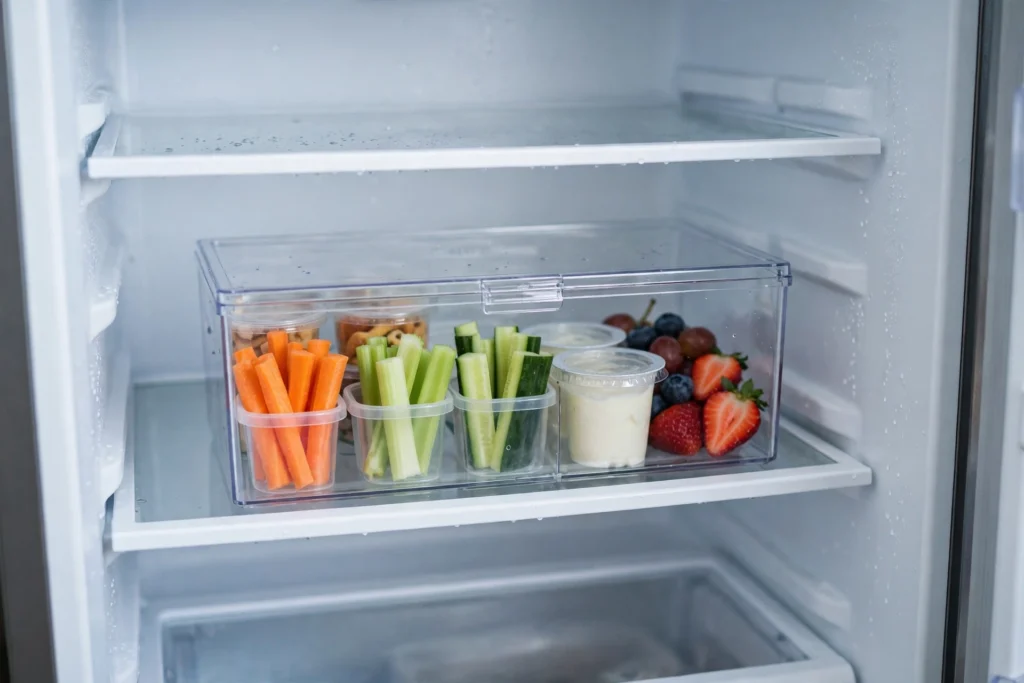
A snack plan only works if the snacks are easier to reach than the biscuits. Give them one fixed spot: a small basket or tray on the counter for the snacks that do not need chilling, kept beside the fridge so everything sits in one place.
Everything in that spot should be ready to eat. Open containers, half-finished packets and snacks that still need washing will sit untouched, and the plan quietly falls apart. If a snack needs a step before eating, do that step during prep, not at snack time.
Keep the spot visible. A clear box at eye level in the fridge beats a deep drawer every time, and a single row of containers is easier to scan than a stack you have to dig through. When the box is empty, the week is done, and that is your cue to prep again.
Common Mistakes to Avoid
Most meal prep snacks mistakes come down to portioning and timing, not cooking.
Prepping snacks nobody actually likes. Start with snacks your household already reaches for, and introduce one new option at a time.
Packing everything in one big container. A large shared box means opening it five times a day and letting warm air in each time. Portion snacks into single servings, so each one is grabbed once and eaten.
Cutting all the fruit on Sunday. Cut fruit loses its texture and appeal after a couple of days, while whole fruit keeps far longer. Prep cut fruit for the first two or three days only, and leave the rest whole until midweek.
Frequently Asked Questions
Can I freeze snacks I prepped for the week?
Some meal prep snacks freeze well and some do not. Energy balls, oat bars and roasted chickpeas freeze fine in a sealed bag, while yoghurt pots, cut fruit and vegetable sticks do not. Thaw frozen snacks in the fridge overnight, and eat them the next day.
How do I keep snacks fresh in a lunchbox without a fridge?
Choose snacks that travel well at room temperature, like oat bars, whole fruit, nuts and popcorn, and keep them in a sealed container away from direct sun. Add a small frozen water bottle beside the food if the day is warm, and eat anything perishable first.
What snacks work well for children’s lunchboxes?
Small, sturdy and finger-friendly snacks travel best: cheese cubes, crackers, grapes cut in half, oat bars and vegetable sticks. Keep portions small enough to finish in a lunch break. A week of lunches planned the same way makes the whole lunchbox easier.
Can I prep snacks for the week with no fridge space at all?
Yes, just choose snacks that live happily in a cupboard. Popcorn, nuts, dried fruit, oat bars, roasted chickpeas and whole fruit need no fridge at all. Keep them in a single basket on the counter or a shelf, and prep the fridge snacks only when space frees up.
How do I stop myself from eating the whole week’s snacks in two days?
Put only two days’ worth where you can see them. Keep the rest in a separate box at the back of the fridge or a high shelf, out of sight until their day comes. A visible limit is easier to respect than a vague intention.
Conclusion
Meal prep snacks work when the system is smaller than the week it serves. Start this weekend with three snacks, one short prep session and one fixed shelf in the fridge, then notice which ones disappear first and prep more of those next week.