
Meal prep for one person works when you stop cooking like a family of four and start cooking like a household of one. Most recipes serve four, most packs feed four, and most prep guides assume someone else will eat the extra portions.
When you live alone, those extras land in your fridge, and a fridge full of the same meal is the fastest way to stop prepping. The fix is smaller batches, finished three different ways.
This guide shows you how to count the meals you need, cook them in one short session, and store them on a single fridge shelf. You will cook two or three dishes and turn each one into a different plate.
Table of Contents
- What Meal Prep for One Person Really Looks Like
- Count the Meals You Actually Need
- The Rule of Three: One Cook, Three Different Plates
- How Much to Cook When You’re Cooking for One
- Shopping for One: Buy Small and Buy Loose
- The 40-Minute Solo Prep Session, Step by Step
- Prep While Dinner Cooks: The Weeknight Top-Up
- The Use-It-Next List
- Storing a Week of Solo Meals in a Small Fridge
- Common Mistakes to Avoid
- Frequently Asked Questions
- Start With One Solo Session This Weekend
What Meal Prep for One Person Really Looks Like
For one person, meal prep does not mean a fridge full of identical boxes. It means two or three cooked dishes, a pot of grains, and a tray of vegetables — enough for four or five dinners and a few lunches.
There is no second person to take the extra portion, so the batch has to match one appetite. You cook once, eat the same ingredients in different forms, and finish the batch before anything goes stale.
That is why solo prep feels easier once the system fits: one cook, one pan, one shelf in the fridge. For starting points, browse Easy Meal Prep Ideas for Small Kitchens.
Count the Meals You Actually Need
Meal prep for one person starts with counting, not cooking. Before you plan a single dish, count the meals you need from the fridge this week: dinners at home, lunches to take, and evenings you will eat out.
Most solo cooks need four or five dinners and three or four lunches. That is far less than a full week of cooking, and it is the number your batch has to cover. Count breakfasts separately, since they are usually the same each morning.
Write the count on a scrap of paper and keep it beside you while you plan. If the week holds two evenings out, cook for three dinners, not five. For the planning habit behind the count, see A Beginner’s Guide to Meal Planning for a Small Household.
The Rule of Three: One Cook, Three Different Plates
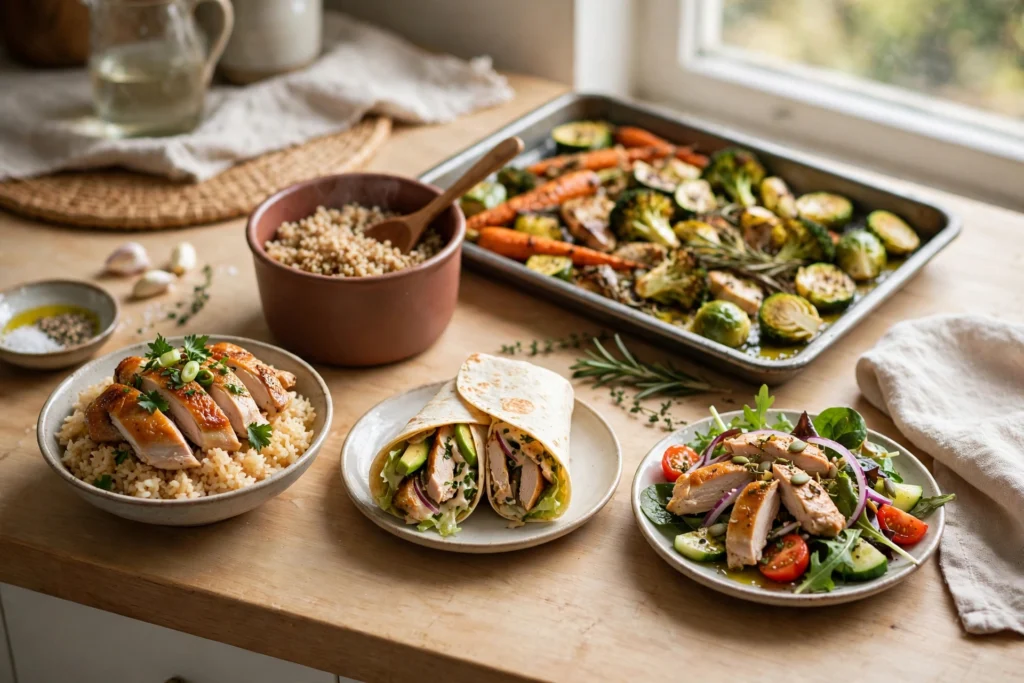
The rule of three is the heart of meal prep for one person: cook one batch, then eat it three different ways across the week. The food stays the same, but the plate changes, so the third serving never tastes like a repeat.
Pick dishes that take well to a new finish: roasted chicken thighs, a pot of spiced beans, or roasted vegetables. Each one can be dressed, wrapped, or spooned over something different.
Plate One: The Grain Bowl
Spoon the cooked dish over a warm grain, add a crunchy topping, and finish with a sauce or a squeeze of lemon. It takes two minutes to build, and it feels like a fresh meal.
Plate Two: The Wrap or Sandwich
The second finish is a wrap or a sandwich. Shred or slice the cooked protein, add a few vegetables, and roll it up with a spread you like. It packs well for lunch and needs no reheating.
Wraps are the best way to use the last of a batch: one portion of chicken and a handful of vegetables make one generous lunch, with nothing left to store.
Plate Three: Soup, Salad Topper, or Stir-Through
The third finish uses the batch as an ingredient, not a main dish. Stir the leftover beans into a quick soup, scatter the chicken over a salad, or toss the vegetables through hot pasta. When a dish becomes an ingredient, you stop seeing it as the same meal again.
How Much to Cook When You’re Cooking for One
The hardest part of meal prep for one person is knowing how much to cook. Most recipes serve four, and halving one on paper is easy, but in the pan it is not that simple. Halve the main ingredients and the liquid, then season by taste rather than by maths.
Some things do not halve neatly. One egg cannot be split, so three eggs for four servings becomes two eggs for two. A single chicken breast or a single tin of beans is already a sensible solo batch.
Think in servings, not in weight. A dinner for one is one serving, and a batch of three servings gives you dinner tonight plus two more meals. Cook three servings of a main dish and one pot of grains, and the week is mostly covered.
Cook poultry right through to a safe minimum internal temperature of 165°F (74°C), and check it with a food thermometer rather than by colour. Small batches cook faster than family ones, so check a few minutes early.
Shopping for One: Buy Small and Buy Loose
Shopping is where meal prep for one person quietly succeeds or fails. A solo shop works best when you buy small amounts of many things, rather than large amounts of a few. Loose vegetables and protein bought by weight fit one appetite far better than bulk bags.
Buy protein at a counter where you can ask for the amount you need, or choose the smallest pack on the shelf. Two chicken breasts, one fish fillet, or half a dozen eggs are a week’s protein when spread across three dishes.
Split anything you cannot use at once on the day you buy it. Half a pack of mince goes into the freezer in a flat bag, and the other half becomes tonight’s dinner. For the money side of small shopping, see Budget-Friendly Meal Prep for Small Households.
The 40-Minute Solo Prep Session, Step by Step
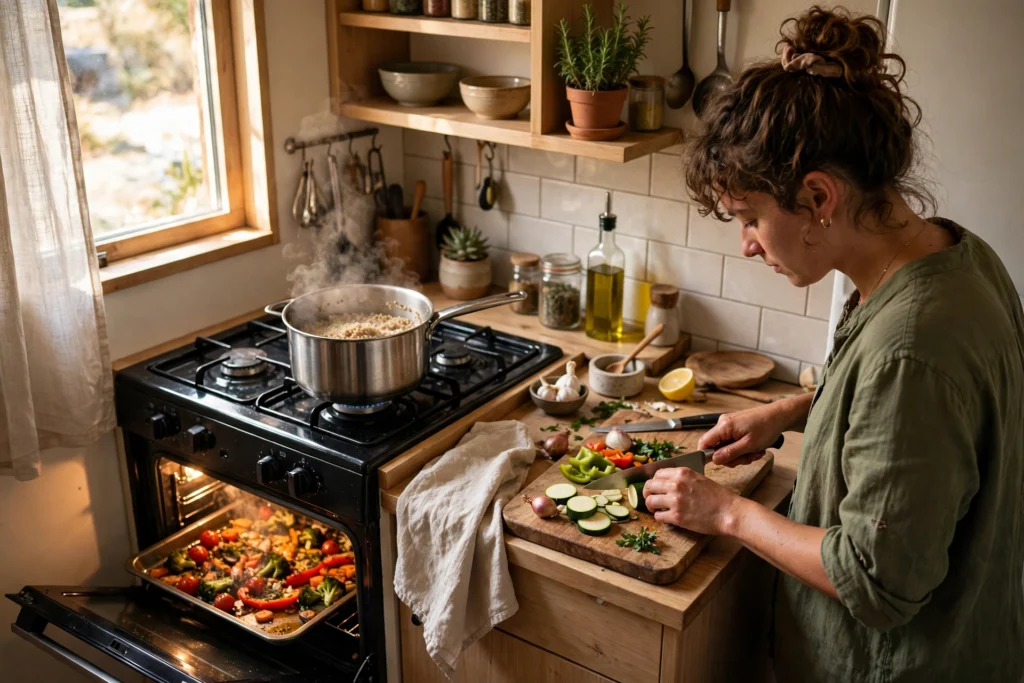
A forty-minute session is enough for meal prep for one person: one cook needs only two dishes and two building blocks. Pick the time and stick to it each week, so it becomes a habit rather than a decision.
Start with the slowest thing. Put the grains on to cook, slide a tray of vegetables into the oven, and chop what the main dish needs while they cook.
Cook the main dish next, in the same pan if you can. A one-pan chicken dish or a pot of beans needs little attention once it simmers, so wash the board and tidy the counter while it cooks.
When everything is cooked, let it cool, then portion it into small containers. Fill one container per meal, grains first and the saucy part on top, and keep crunchy toppings in a small separate pot.
Use the last five minutes for the reset. Wash the pans, wipe the counter, and put the containers on one fridge shelf. A session that ends with a clean kitchen feels finished.
If counter space is tight, How to Meal Prep with Limited Counter Space shows how to set up a single workstation. To stretch the session to a full hour, see One-Hour Meal Prep Plan for Busy Weekdays.
Prep While Dinner Cooks: The Weeknight Top-Up
You do not need a weekend session to keep solo prep going. The weeknight top-up uses the time while tonight’s dinner cooks to prepare tomorrow’s lunch, and it takes no extra slot in your day.
While a pan simmers or a tray roasts, chop tomorrow’s vegetables, cook a small pot of grains, or fill one lunch container. Ten minutes is enough for one lunch.
Keep the top-up to one job a night. A lunch packed on Monday, a grain pot on Tuesday, and a salad on Wednesday add up to three days of food with no session at all.
The Use-It-Next List
Every solo kitchen collects opened things: half an onion, a tin with two spoonfuls left, a bunch of herbs, a lemon cut in half. These are the items that get forgotten at the back of the fridge, and for one person they are the biggest source of waste.
Keep a short list on the fridge door, written on a scrap of paper or a small whiteboard. Each line names the opened item and its next meal: half an onion into Thursday’s soup, the rest of the tin into Friday’s beans.
Check the list before you plan the next meal, and cross items off as you use them. The list takes thirty seconds to keep, and it turns opened food into a plan instead of a surprise.
Storing a Week of Solo Meals in a Small Fridge
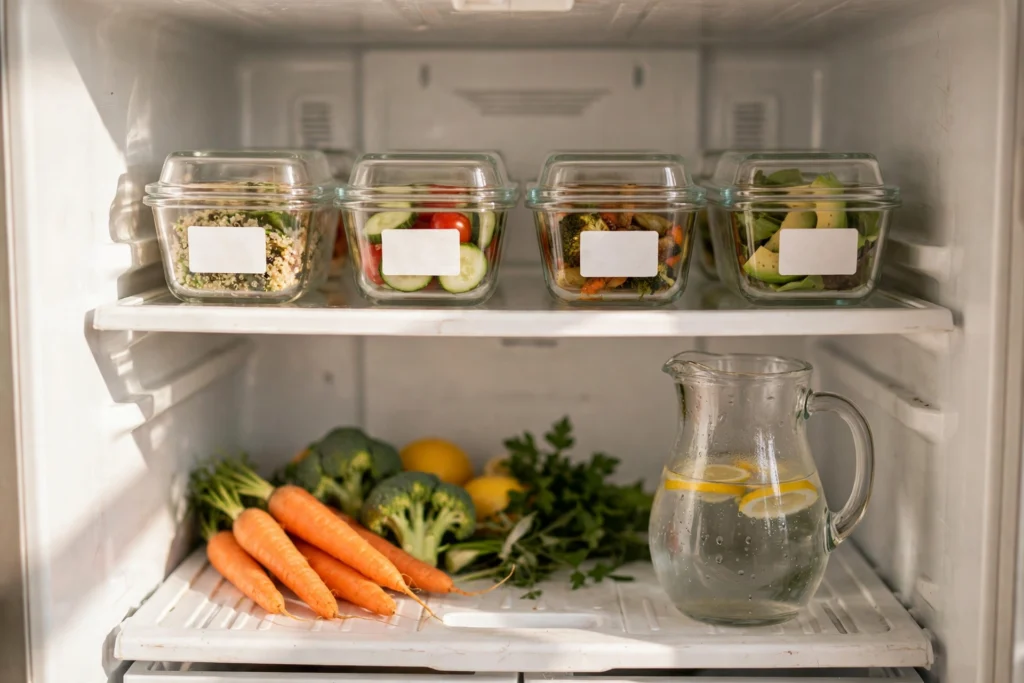
Meal prep for one person needs far less fridge space than most guides suggest. Four or five small containers fit on a single shelf, and one shelf is all solo prep should take.
Label every container with the day and the contents, using masking tape and a pen. It is tempting to skip the label and trust your memory, but by Wednesday two similar containers are easy to mix up.
Eat fridge meals within a few days and freeze anything that will wait longer, following the general guidance on storing food safely from the FDA. Keep dressings and crunchy toppings separate until serving time, so they stay fresh.
For the full picture on fridge layout, read Small Fridge Organization for Meal Prep. For containers that stack well, see How to Store Meal Prep Containers in a Small Kitchen, and to freeze single portions flat, see Freezer Meal Prep for Small Kitchens.
Common Mistakes to Avoid
- Cooking a family recipe exactly as written. A recipe that serves four makes four portions, and one person eats one tonight. Cook the full batch only if you plan to freeze the extra portions the same day.
- Prepping seven identical lunches. Five days of the same lunch box is a promise you will break by Wednesday. Cook two lunches from one dish and two from another.
- Buying the bulk bag to save money. A large bag is only a saving if it all gets used. For one person, the smaller pack that gets finished is cheaper.
- Prepping before deciding what you will eat. A fridge full of cooked food you do not fancy is worse than an empty one. Count the meals, pick the dishes, and only then start cooking.
- Buying pre-cut vegetables for every meal. Pre-cut packs cost more per serving and soften faster than whole vegetables. For one person, a whole pepper or a small head of broccoli, cut at home on the night you cook, stays fresher and costs less.
- Making the session too big for one cook. A two-hour session for one person burns out fast. Forty minutes and two dishes beat a marathon session you dread repeating.
Frequently Asked Questions
Can I do meal prep for one person without a freezer?
Yes, and many solo cooks do. Plan for three or four days instead of a full week, cook smaller batches, and shop twice a week. The same counting and finishing habits still work.
What if I have a guest for dinner one night?
Cook one dish that scales easily, such as a tray bake or a pot of stew, and make a double batch of that dish only. Serve the guest from the same pot. For pairs who cook together regularly, see Meal Prep for Couples.
How do I stop getting bored eating alone?
Plate each meal properly, even when it comes from a container. A real plate and eating at the table change how a reheated meal feels.
What if my work schedule changes every week?
Prep building blocks instead of finished meals, and cook them when you have forty minutes, not on a fixed day. A pot of grains, a tray of vegetables, and one cooked protein wait in the fridge until the night you need them.
Start With One Solo Session This Weekend
Meal prep for one person works best when it stays small: count the meals you need, cook two dishes in forty minutes, and finish each one three different ways. Shop small, label everything, and keep opened items on a use-it-next list.
Pick one evening this week and run a single forty-minute session. Cook one main dish, one tray of vegetables, and one pot of grains, then eat the first plate tonight. If that session makes your weekdays easier, repeat it next week and add a second dish.