
Vegetarian meal prep works in a small kitchen when you build meals around filling plant foods instead of treating vegetables as a side dish. Beans, lentils, eggs, grains and roasted vegetables can carry a whole week of lunches and dinners. You do not need a big fridge, a second oven or a long counter to eat well without meat.
The trick is planning for fullness, not just freshness. A box of plain salad leaves you hungry by mid-afternoon. Beans, grains and a good dressing keep you going. Start with the filling foods, then add fresh bits around them.
Table of Contents
- What Vegetarian Meal Prep Means in a Small Kitchen
- Building a Filling Vegetarian Plate
- Vegetarian Staples Worth Keeping in a Small Kitchen
- Seven Vegetarian Meal Prep Ideas That Fit a Small Kitchen
- A 50-Minute Vegetarian Prep Session, Step by Step
- Storing Vegetarian Meals in a Small Fridge
- Keeping Vegetarian Meals Interesting All Week
- Common Mistakes to Avoid
- Frequently Asked Questions
- Conclusion
What Vegetarian Meal Prep Means in a Small Kitchen
Vegetarian meal prep simply means planning a week of meals without meat or fish, cooked ahead in one or two short sessions. Eggs and dairy can be part of it, or not. What matters is that every box is a proper meal, not a snack in disguise.
A small kitchen suits this style of cooking. Vegetables, beans and grains need less fridge space than a week of raw meat, and most vegetarian dishes cook in a single pot, pan or tray.
People often worry that meat-free meals will feel light or repetitive. Vary the base, the seasoning and the texture and they will not. Lentils on Monday, a bean bowl on Tuesday and a pasta bake on Wednesday already feel like three different meals.
Building a Filling Vegetarian Plate
A filling vegetarian plate has four parts: something starchy, something protein-rich, something fresh and something flavourful. The starchy part might be rice, pasta, potatoes or bread. The protein-rich part is usually beans, lentils, eggs, cheese or tofu.
Fresh vegetables bring crunch and colour, and they keep a reheated meal from feeling heavy. Raw cucumber, grated carrot or shredded cabbage all work, and none needs cooking. Add them at serving time so they stay crisp.
Flavour is the part people skip, then wonder why the food feels dull. A spoonful of chutney, a squeeze of lemon or a pinch of toasted spices can lift the same beans into a different meal. MyPlate’s guide to vegetables shows how much variety one group of foods can offer.
Vegetarian Staples Worth Keeping in a Small Kitchen
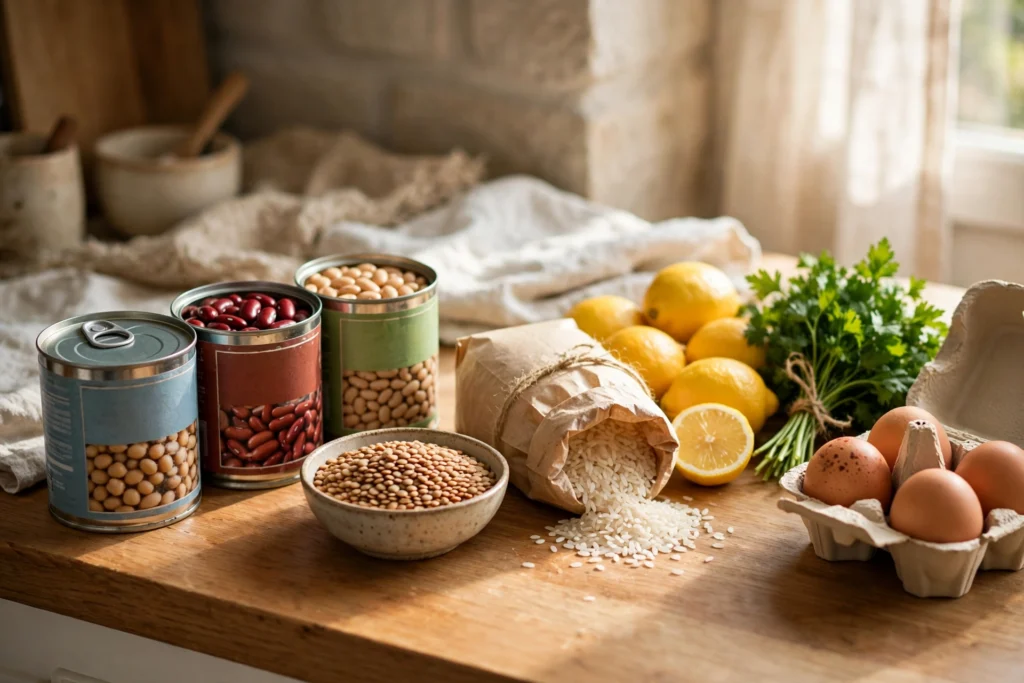
A small kitchen cannot hold every ingredient, so the staples you keep should earn their shelf. The best ones for vegetarian meal prep are cheap, keep well and turn into several different meals.
Pantry Staples
Tinned beans and lentils are the backbone of meat-free cooking. Chickpeas, kidney beans, black beans and butter beans each suit different dishes, and tinned tomatoes and coconut milk turn them into a meal with almost no effort. Keep two or three tins of each.
Dried grains and pasta fill the other half of the shelf. Rice, couscous, pasta and oats cook fast and store for months, and red lentils cook in about twenty minutes with no soaking. Peanut butter and soy sauce add flavour to noodles, dressings and stir-fries.
Fridge Staples
Eggs are the most flexible food in a vegetarian fridge. They boil, fry, scramble and bake, and they turn leftover vegetables into a frittata or a fried rice. A block of cheese and a tub of plain yoghurt cover breakfasts, dressings and toppings.
Fresh herbs and lemons take up little space and change everything. A bunch of parsley, coriander or mint lifts a plain grain bowl, while lemon juice brightens beans, roasted vegetables and dressings. Buy them weekly and use them first.
Freezer Staples
A small freezer still holds a few bags that save a vegetarian week. Frozen peas, spinach, sweetcorn and mixed vegetables cook in minutes. They rescue a meal when the fresh vegetables run out on Thursday.
Frozen bread, wraps and grated cheese are worth the space too. Wraps turn leftover beans into lunch, toast turns soup into dinner, and cheese finishes a pasta bake. The freezer meal prep guide shows how to fit them into a small freezer.
Seven Vegetarian Meal Prep Ideas That Fit a Small Kitchen

These ideas use one pot, one pan or one tray each, so vegetarian meal prep never asks for more space than a small kitchen has. Pick two or three, cook them in one session and mix them across the week.
The week of lunches guide shows how to spread them out, and the easy meal prep ideas for small kitchens pair well with them.
1. Roasted Vegetable and Chickpea Traybake
Toss chopped peppers, courgettes, red onion and tinned chickpeas with oil and smoked paprika on a tray. Roast until the edges catch a little colour, then portion into boxes with couscous. One tray, one wash-up, four portions.
2. Bean and Sweet Potato Burrito Bowls
Roast sweet potato cubes with cumin while black beans warm with garlic and lime. Layer both over rice with sweetcorn, tomato and a spoonful of yoghurt. Pack the yoghurt separately so the rice stays fluffy.
3. One-Pot Tomato and White Bean Pasta
Simmer pasta in a pot with tinned tomatoes, white beans, garlic and a handful of spinach until the pasta is tender. The starch thickens the sauce as it cooks, so there is nothing to drain. It reheats well for three days.
4. Vegetable Fried Rice with Egg
Fry leftover rice in a hot pan with frozen peas, sweetcorn, grated carrot and spring onions, then push it aside and scramble two eggs in the same pan. Stir everything together with soy sauce. Cold rice fries better than fresh.
5. Stuffed Peppers with Rice and Beans
Halve peppers, fill them with cooked rice, kidney beans, sweetcorn and grated cheese, then bake until they soften. They hold their shape in a container and reheat in minutes. Two peppers with a side salad make a full dinner.
6. No-Cook Mezze Boxes
Fill a box with hummus, cucumber sticks, cherry tomatoes, olives, a boiled egg and a wedge of pitta. Nothing needs cooking on the day you eat it, and the box keeps for two or three days. These suit hot days and busy work lunches, as the no-cook meal prep ideas guide shows.
7. Mushroom and Spinach Pasta Bake
Cook pasta, then stir it through fried mushrooms, garlic and spinach with a spoonful of cream cheese. Tip it into a dish, top with grated cheese and bake until golden. It slices into neat portions and freezes well, so cook a double batch and save half.
A 50-Minute Vegetarian Prep Session, Step by Step
A focused fifty minutes of vegetarian meal prep can set up most of the week. Cook in the right order and start with the longest job.
- Put a pot of rice or pasta on first; it cooks itself while you do everything else.
- Slide a tray of vegetables and chickpeas into the oven.
- Start the pasta bake or the one-pot pasta on the hob.
- While the oven works, boil a few eggs and chop raw vegetables.
- Stir the fried rice together once the rice is cooked and cooled a little.
- Cool everything for ten minutes, then portion into containers.
- Stack the containers in the fridge, ready meals at the front.
Work on one dish at a time rather than juggling three pans at once. A calm, ordered session beats a frantic one, and you finish with a clean counter. This is batch cooking at its simplest.
If you are short on counter space, this session still works. Clear the counter before you begin, use a tray over the sink as extra space, and wash each pot as soon as it is empty. The guide to meal prep with limited counter space has more ideas.
Storing Vegetarian Meals in a Small Fridge

Vegetarian meals store well because there is no raw meat to keep separate, but they still need a little care. Cool cooked food before it goes in the fridge, and do not leave it sitting out for hours. Spread it on a tray so it cools quickly, then refrigerate it within two hours.
Cooked bean dishes, pasta bakes and grain bowls keep for three to four days in the fridge, and cut vegetables keep for a similar length in a sealed box.
Dressings last longer in their own pots, so add them at serving time and the meal stays fresh. The guide to keeping meal prep ingredients fresh covers habits that protect flavour.
Use clear, stackable containers so you can see what is inside without opening every box. Label each one with its contents and date, and eat the oldest first.
A small fridge fills fast, so the small fridge organization guide shows how to give each one a home. The FDA’s guide to storing food safely explains the rules in plain language.
Keeping Vegetarian Meals Interesting All Week
Boredom is the quiet reason most meal prep plans fail. The same beans and rice, eaten the same way five days running, stops feeling like a meal and starts feeling like a chore. Variety is not a luxury; it keeps the system going.
Change the cuisine before you change the dish, and add crunch at serving time. The same chickpeas taste Mediterranean with lemon and herbs, Mexican with cumin and lime, or Asian-inspired with soy and sesame. Toasted seeds or crispy onions on top give a soft dish the texture it was missing.
Common Mistakes to Avoid
Most vegetarian meal prep mistakes come down to texture and timing, not cooking skill. Watch for these three and the week runs far more smoothly.
Prepping only salads. A week of salad boxes looks fresh on Sunday and feels empty by Tuesday. Build each box around beans, grains or eggs first, then add the salad on top. A filling base is what makes the meal last.
Shopping without a list. A prep session without a list turns into extra trips to the shop and a fridge full of things you did not need. Write the week’s meals first, list only what they need, and shop once. The list is what keeps the session to fifty minutes.
Cooking vegetables too soft on prep day. Vegetables that are soft on Sunday turn to mush when you reheat them. Roast or steam them until just tender, so the reheat finishes the job instead of ruining it. A little bite left in them keeps the meal pleasant all week.
Frequently Asked Questions
Can I do vegetarian meal prep if I don’t eat eggs or dairy?
Yes, and the meals in this guide still work with small swaps. Replace eggs with extra beans or tofu, and swap yoghurt for a tahini dressing. The plate still needs a protein-rich food and a filling base, so check both are in every box.
How do I get enough iron from vegetarian meal prep?
Build meals around lentils, beans, tofu, spinach and fortified breakfast cereals, and pair them with foods rich in vitamin C, like peppers, tomatoes or citrus fruit. Vitamin C helps the body absorb iron from plant foods, so a squeeze of lemon over lentils does more than add flavour.
Can I freeze vegetarian meals I prepped for the week?
Yes, and bean dishes, pasta bakes and soups freeze best. Cool them first and portion them into single servings. Thaw overnight in the fridge, and reheat until piping hot all the way through. Fresh salads, yoghurt pots and no-cook boxes are better eaten fresh, not frozen.
Do I need a blender or food processor for vegetarian meal prep?
No, and a small kitchen gets by fine without one. A sharp knife, a chopping board and a grater handle most vegetables, while a fork mashes beans for spreads and fillings. A small hand blender earns its place only if you make soup or smoothies often, and even then it is a convenience, not a requirement.
What if my family eats meat and I don’t?
Cook the same base for everyone and keep the toppings separate. A tray of roasted vegetables with rice works for the whole table, and you add beans while the rest of the family adds meat. Cooking for one instead? The meal prep for one person guide scales these portions down.
Conclusion
Vegetarian meal prep is less about willpower and more about a simple system. Start this weekend with one idea from the list — a tray of roasted vegetables and chickpeas or a pot of tomato and white bean pasta — and add a second dish next week. Your fridge and your weeknights will feel the difference.